

Employment gaps can matter, but they don’t automatically define your application. Learning how to explain a long period of unemployment starts with a brief, honest account: use one or two straightforward sentences, then shift attention to the skills and experience you’ll bring to the role.
It’s understandable to worry that time out of work will raise questions. The best response isn’t to hide the gap or overexplain it. Show what you can contribute now, including transferable skills you developed during your time away.
This guide explains when employment gaps may affect an application and how to discuss yours clearly. You’ll learn to describe relevant experience from a career break, be honest about your circumstances, and write a cover letter that keeps the focus on your fit for the job.
Key Takeaways
- Identify skills you built or used during your time away, then connect them to the role you want.
- Understand what may concern employers and how to keep the focus on your qualifications.
- Explain your circumstances honestly without letting the gap dominate your application.
- Use your cover letter to address time away briefly and bring attention back to the value you can offer.
1. Describing transferable skills gained during a break
Treat your time away as a record of tasks, problems, and results. List what you did, then connect each responsibility to a skill in the job description. For example, coordinating appointments for a family member can demonstrate scheduling, prioritization, and clear communication. Include only responsibilities you actually handled. Specific actions give employers more to assess than a general claim about staying productive.
Freelancing can demonstrate project management, client communication, and the ability to deliver work independently. Describe the service, your contribution, and the result. For example, a freelance designer might explain how they created social media graphics for a small business campaign and met its deadline. Online courses can also show initiative and continued learning. Name the subject, such as spreadsheet analysis or project management, and connect it to a task in the target role. Don’t present a course as professional experience; explain which skill you practiced.
Volunteer work can provide concrete evidence of collaboration, organization, and leadership. Focus on an outcome rather than a list of duties. For example, a volunteer who helped a nonprofit increase its sponsors from 10 to 15 in one year can highlight outreach, relationship-building, and results tracking. Use that structure for your own experience: state the goal, explain your action, and give the result. If you supported an event, mention the planning or coordination you handled instead of implying you led the whole project.
Translate these examples into language that fits the role. If a job calls for customer communication, mention client conversations from freelance work or volunteer outreach. If it requires organization, describe coordinating schedules or tracking project tasks. Be precise about the scope of each activity. For instance, don’t describe a three-day-a-week unpaid internship as full-time employment. Accurate details present the break honestly and make your abilities easier to connect to the employer’s needs.
2. Do employment gaps really matter?
Employment gaps can prompt questions, but they don’t automatically outweigh relevant experience. A gap may last from a few months to several years; long-term unemployment typically means a period lasting over six months. Employers may consider how the gap relates to the role, whether your dates are clear, and what you can contribute now. Address the timeline directly, then turn to qualifications that match the job.
To explain a long employment gap on a resume, use accurate dates and a short, neutral description if context will help. You can omit months from past employment dates when they aren’t required, showing years instead. For example, a resume may use “2015 - 2019” rather than “January 2018 - August 2019.” Don’t change dates to disguise time out of work. If the application asks for months or a specific timeline, provide them accurately.
In the United States, employers can verify employment history during hiring, although the process varies by employer and role. A gap isn’t a past employer to verify, so keep your employment dates accurate and prepare a concise explanation. Don’t invent freelance work or describe a course as a job. A direct account, such as “I took time away for family responsibilities and am ready to return,” gives context without making unsupported claims.
Keep former employers out of the blame cycle. If you left after a difficult situation, don’t criticize a former boss or company; explain your departure briefly and turn to the skills you’ll bring. For example, say you’re seeking a role better aligned with your experience, then name a relevant strength. Clear dates and neutral language make your resume easier to assess. Resume tailoring can help align your experience with the role while keeping your timeline accurate.
About 30% of employers report viewing large employment gaps negatively. For an unemployment period of a year or less, a job seeker can soften its impact by omitting the month from resume employment dates. Job seekers may need to prepare to explain an employment gap as short as six months or as long as 10 years. The Muse advises job seekers to be prepared to explain an employment gap of six months in an interview.
3. Being honest about time out of work
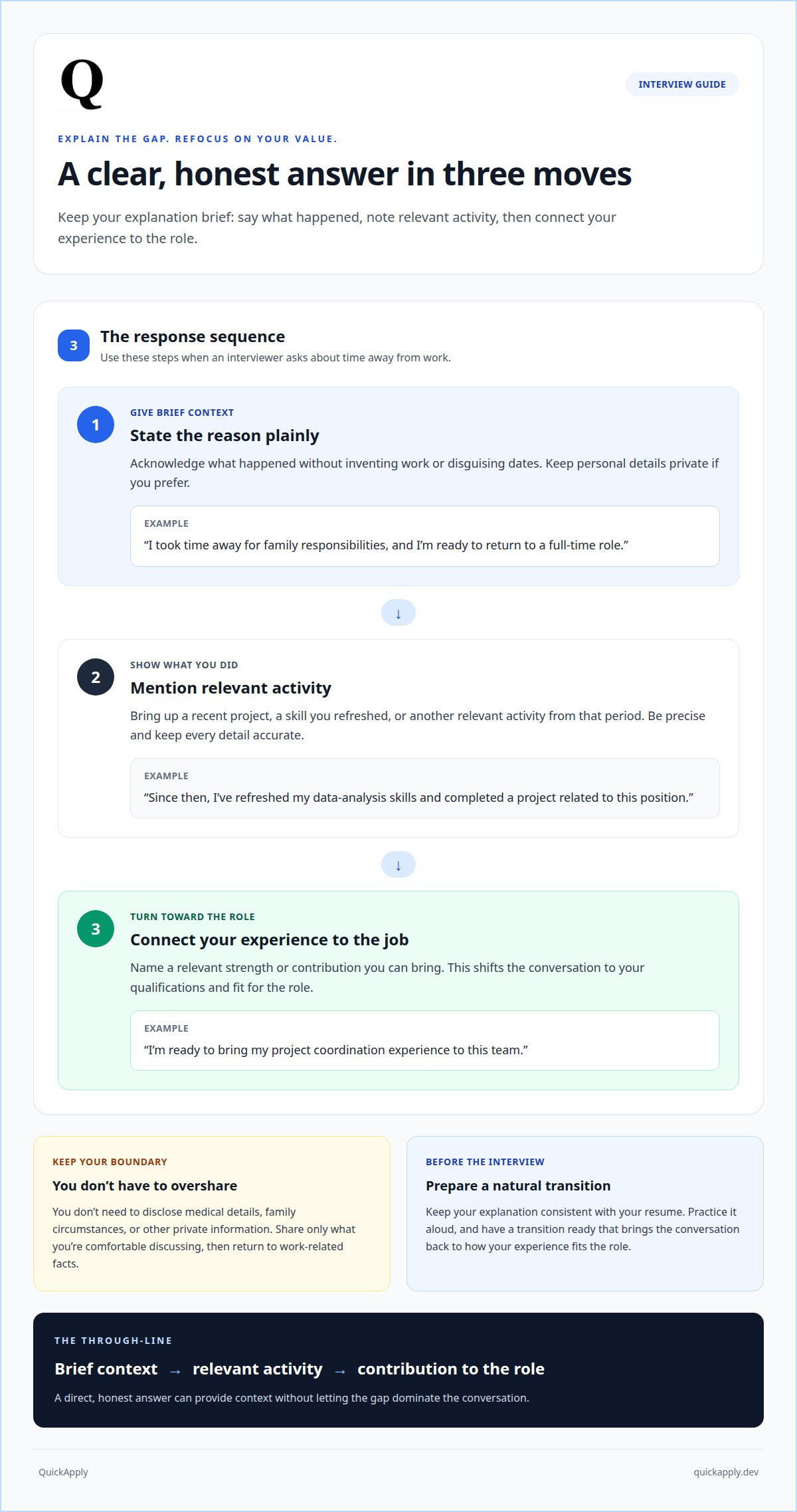
Prepare a clear explanation before an interview and keep it consistent with your resume. Say what happened plainly, without inventing work or disguising dates. For example: “I took time away for family responsibilities, and I’m ready to return to a full-time role.” This gives context and signals your next step without revealing private details. A direct, honest answer to how to explain a long period of unemployment also helps shift the conversation to your qualifications.
If an interviewer asks about the gap, use three steps: state the reason briefly, mention relevant activity from that period, and connect your experience to the role. If you were laid off and asked why you left, acknowledge the layoff, then turn to a recent project or skill relevant to the job. For example: “The role ended in a layoff. Since then, I’ve refreshed my data-analysis skills and completed a project related to this position.” Keep every detail accurate.
You can answer questions about unemployment without oversharing by setting a boundary and returning to work-related facts. You don’t need to disclose medical details, family circumstances, or other private information to explain a break. Try: “I stepped away for personal reasons, and I’m now prepared to focus on this role.” If the interviewer follows up, share only what you’re comfortable discussing, then mention a recent accomplishment or relevant strength.
A voluntary career break also calls for a concise explanation that shows you’re ready to contribute. For example: “I took a planned break to manage family responsibilities. I’m ready to bring my project coordination experience to this team.” Practice your answer aloud so it sounds natural rather than rehearsed. If a layoff or personal matter is difficult to discuss, prepare a brief response and a transition, such as, “I’m glad to talk about how my experience fits this role.” Then name one contribution you can make.
4. Explaining a long gap in a cover letter
Your cover letter doesn’t need to account for every month away from work. Use one or two direct sentences for context, then focus on how you’ll do the job and contribute. For example: “I took time away to care for a family member. I’m now ready to bring my customer-support experience to your team.” The explanation is straightforward, and the next sentence connects your experience to the role.
Strong examples are honest, brief, and relevant. For a layoff, write: “My previous role ended in a company layoff, and I used the transition to refresh my technical skills.” For a planned break, try: “I took a career break to manage family responsibilities, and I’m prepared to return.” Adapt each example to what actually happened. Don’t claim a course, project, or freelance assignment you didn’t complete.
If you’re changing careers after a long gap, connect your preparation during the break to the new role’s needs. Name a relevant course, project, or transferable skill, then explain how it supports your next step. For example: “During my break, I completed coursework in data analysis. I’m now applying my client-service background and new analytical skills to this operations role.” Focus on evidence and contribution, not defending your timeline.
Place the gap explanation after your opening statement of interest, not in the lead. Then use the remaining space for one specific qualification and how it fits the employer’s needs. If you mention volunteering or freelance work, describe your actual contribution and connect it to a job requirement. Close by reinforcing the value you can bring, rather than repeating the reason for your absence. Generate a role-focused cover letter to structure your explanation and keep the employer’s needs in focus.
The Muse recommends steering the conversation toward how you’ll do the job and contribute to the organization. Treat your explanation as a brief transition, not the main message. Connect what you learned or practiced during the break to a responsibility in the role. This keeps the focus on your readiness and helps the employer picture you in the position.
QuickApply
QuickApply helps turn a clear explanation of your employment gap into a more focused application. Use Resume Tailoring to align your experience with a specific role, and Cover Letter Generation to shape a concise, honest explanation around the employer’s needs. Interview Practice can help you prepare to discuss your timeline, while the Application Tracker keeps your search organized as you apply. These tools are useful when you’re ready to move from explaining time away to presenting a consistent application. Keep your dates accurate and your account personal, then let your relevant skills and readiness lead. Contact QuickApply to get started with your job search.
Make your next application count
Your next application is a chance to turn a career transition into a clear professional direction. Rather than letting the gap lead the story, explain why this role makes sense for you now. Connect your experience and current priorities to the work you’re ready to take on.
When deciding how to explain a long period of unemployment, treat the explanation as a bridge, not the destination. Keep your account consistent across your resume, cover letter, and interview, while adjusting the emphasis for each role. This gives employers a coherent picture of the candidate you are today.
Before applying, read the job description again. Choose one relevant strength to emphasize, then support it with specific evidence elsewhere in your application. A focused message can shift attention from time away to the contribution you’re prepared to make. For help moving forward with a clearer application, contact QuickApply. Your next opportunity can begin with the story you choose to tell.
Frequently Asked Questions
Do employment gaps really matter?
They can influence an employer’s first impression, but they don’t determine your fit by themselves. A 2025 MyPerfectResume report found that 47% of American workers have experienced a career gap. Use your application to make your qualifications and recent readiness easy to assess. The employer’s role requirements and your relevant experience provide more useful context than the gap alone.
What is considered a gap in employment?
An employment gap is a stretch between jobs when you weren’t employed in a formal role. It may include time spent caregiving, studying, recovering, looking for work, or handling personal responsibilities. It doesn’t mean you were inactive. If you did contract work or ran a business during that period, describe it accurately as freelance work or self-employment rather than creating a misleading timeline.


