

Feeling overwhelmed by the job search process? Turn it into a repeatable workflow: research promising employers, tailor your application materials, connect with people in your network, and set a realistic weekly application target. Small, trackable actions are easier to manage than one daunting goal.
It’s frustrating when every posting seems to call for a fresh resume, a cover letter, and more time than you have. You don’t need to apply to everything. Focus on roles that fit, make relevant edits to each application, and keep networking alongside your applications.
This article shows you how to break the search into manageable tasks, build a strategy around your goals, and track applications and follow-ups. You’ll also learn when expert help can make the process more focused, so you can spend less energy keeping everything straight and more on moving toward a role that fits.
Key Takeaways
- Turn the search into small, scheduled tasks, and record progress to keep momentum visible.
- Prioritize relevant roles, tailored application materials, and networking instead of applying indiscriminately.
- Set clear job criteria and a regular routine, then adjust your approach when responses aren’t coming.
- Use career professionals for focused support when you’re stuck on applications or interview preparation.
- Track applications, deadlines, and follow-ups in one place to keep next steps clear.
1. Breaking the search into manageable tasks
If you’re feeling overwhelmed by the job search process, replace the giant goal of “get hired” with actions you can complete today. A job search averages 3-6 months, and an average posting receives 250 applications. Those figures make a clear workflow more useful than trying to control every outcome.
Build a short weekly plan around trackable tasks: research employers, identify suitable openings, tailor your materials, reach out to contacts, and follow up. Break each task down further. Instead of “research companies,” choose one employer, review its products and team, and note why a specific role fits your skills. Set a realistic weekly application target, then protect time for networking and breaks.
Keep a simple progress log. Record completed actions, not just interviews or offers: a useful contact, a stronger resume bullet, or an application submitted before its deadline all count. At the end of each work session, note the next small step so you don’t have to start from scratch the next day. A brief gratitude list or a note about one positive moment can also help shift your focus from unanswered applications.
Rejection is information, not a verdict on your career. If an employer declines your application, record the role and any feedback, then look for a practical adjustment. For example, if a recruiter says your project experience wasn’t clear, revise that resume section to show the project, your contribution, and its result. Ask politely for feedback when appropriate, but keep your next planned task moving rather than waiting for a reply.
What job-search scams and misleading postings should you watch out for? Treat requests for upfront payment, vague job duties, unusually high pay for unclear work, or demands for sensitive personal details before a formal hiring process as warning signs. Pause, verify the employer and role through official channels, and don’t send money or personal information in response to pressure.
Work in a defined block, then step away: take a walk, breathe deeply, or talk with someone supportive. When discouragement builds, share a specific setback with a trusted friend or mentor and ask for a useful perspective. Small actions won’t control hiring decisions, but they give your search a structure you can repeat and adjust.
Make the plan specific enough to act on: choose a company to research, decide how to tailor your application materials, and set a manageable weekly application target. A small, defined task is easier to begin than the broad aim of finding a job, and completing it can build momentum. Record these small wins, including preparation and finished steps, rather than judging progress only by the final outcome.
When an application is declined, consider what the experience might teach you. If appropriate, ask politely for feedback and use any useful response to guide a practical change in your next application. To keep your outlook from narrowing to setbacks, notice what went well or write a gratitude list. These brief reflections can complement your concrete tasks and help you return to the next manageable step.
2. Prioritizing networking and tailored applications
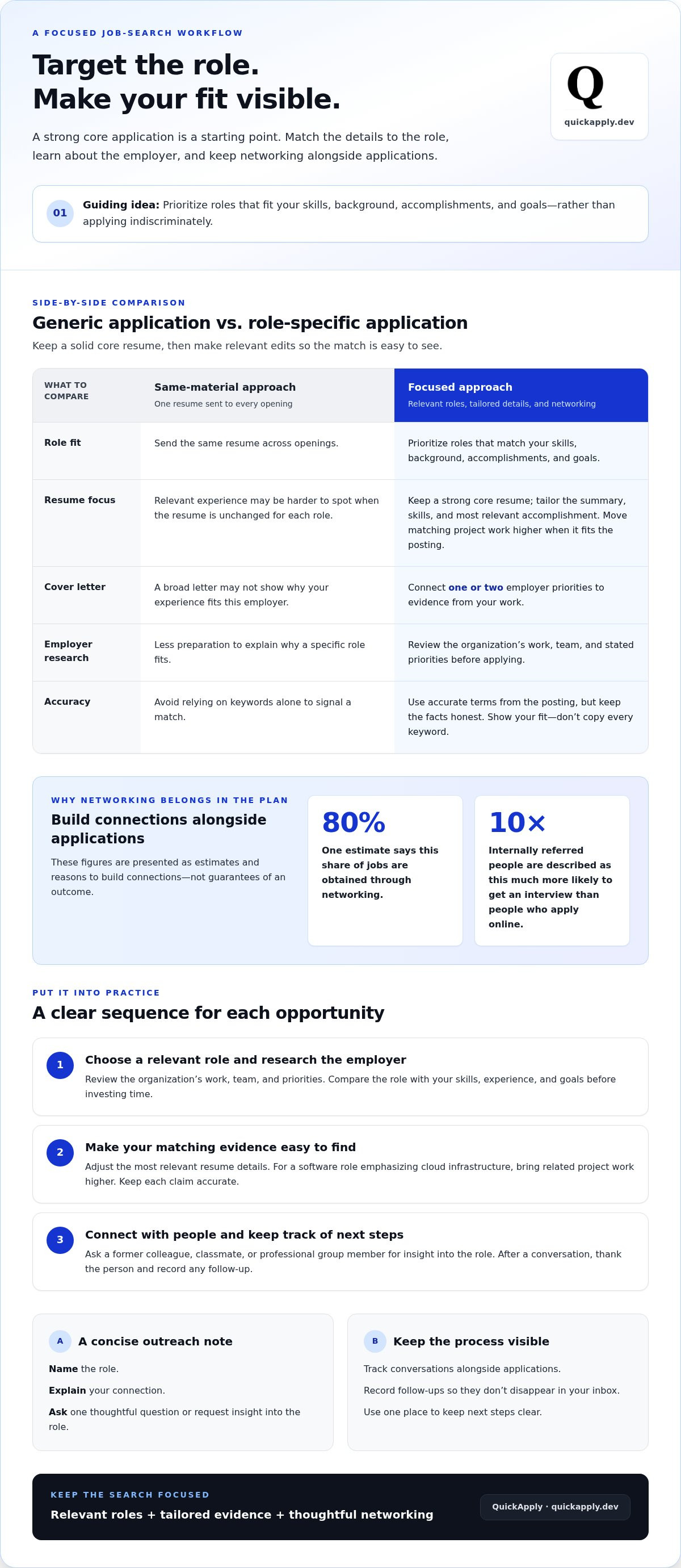
A targeted search beats sending the same resume to every opening. Start with roles that match your skills, background, and accomplishments. Then adjust your resume to reflect each posting’s priorities. If a software role emphasizes cloud infrastructure, for example, move relevant project work higher and use accurate terms from the description. Keep the facts honest. The goal is to make your fit easy to see, not to copy every keyword.
Choose a short list of promising employers and research each one before applying. Review the organization’s work, team, and stated priorities. Then look for people in your network who know the company or its field. A former colleague, classmate, or professional group member may offer useful context or introduce you to someone on the team. Make a specific request, such as asking for insight into the role, rather than opening with a demand for a referral.
Networking deserves a regular place in your search. One estimate says 80% of jobs are obtained through networking, while people referred internally are described as 10 times more likely to get an interview than people who apply online. Treat these figures as a reason to build connections, not as a promise of an outcome. A referral is most useful when the contact understands your relevant experience and can speak to your fit.
Make each application specific without rebuilding it from scratch. Keep a strong core resume, then tailor the summary, skills, and most relevant accomplishment for the role. For a product position, highlight a launch or customer problem you helped solve. For a technical role, bring forward the tools and systems named in the posting. A tailored cover letter should connect one or two employer priorities to evidence from your work.
Use a simple outreach routine. Send a concise note that names the role, explains your connection, and asks one thoughtful question. After a conversation, thank the person and record any next step. Informational interviews can reveal how a team works and which skills matter, even when no opening is available. Track conversations alongside applications so follow-ups don’t disappear in your inbox.
Spend your effort where you have influence: the relevance of your materials, the clarity of your outreach, and the quality of your preparation. If drafting a role-specific letter slows you down, use a cover letter drafting workflow to organize the employer’s needs and your matching examples. Review every draft for accuracy and a personal, specific fit before sending it.
3. Creating a job-search strategy
Prioritize postings by comparing each role with your skills, experience, and goals before investing time. If you’re seeking work soon, focus on roles where you meet at least 75-80% of the listed requirements. Skip openings that conflict with your essential criteria, such as location, schedule, or the type of work you want.
Start by defining your criteria in writing. Name the industries or companies that interest you, the skills you want to use or build, and the work environment where you do your best. For example, a software professional might prioritize product teams, hands-on development, and a collaborative environment. These filters make it easier to assess new postings without restarting your decision process.
Set a planning horizon that reflects the work involved. Three months is described as the bare-minimum timeframe for a job search, so avoid building your strategy around an immediate offer. Divide that period into reviewable stages: define target roles, establish a consistent application routine, and assess which channels lead to useful conversations or interviews.
Translate your goals into a weekly schedule. Set aside blocks for researching employers, networking, applications, and skill-building, with breaks between demanding tasks. For instance, reserve one block to review role requirements and another to prepare materials for a strong match. A structured calendar keeps browsing from consuming every available hour.
Use saved searches and job-board alerts to surface roles that meet your criteria. The article’s recommended routine spends about 20% of job-seeking time on job boards to identify opportunities. Set alerts around relevant titles, skills, and locations, then review the results during a scheduled block instead of repeatedly refreshing listings throughout the day.
Run each posting through a simple decision filter. Check whether the core responsibilities fit your strengths, the required skills match your background, and the role supports your goals. An appealing title may still be a poor fit if the daily work differs from what you want. Save promising openings and move on quickly from mismatches.
Review your strategy using observable signals. If suitable applications aren’t leading to the responses you expect, update your resume, practice interview skills, or broaden your search criteria. Change one thing at a time, such as adding a related job title to saved searches. That makes it easier to see which adjustment improves your pipeline.
Keep the plan flexible, but make changes deliberately. At the end of each week, compare completed actions with your schedule and identify the main bottleneck. If research is taking too long, narrow your employer criteria. If applications stall, revisit role fit and materials. A regular review turns the job search into a process you can refine.
4. Getting help from career professionals
Bring in expert support when you can identify a specific bottleneck. A career coach can help clarify goals and structure decisions. A resume writer can review how clearly your experience matches a role. A staffing agency can offer guidance on openings and hiring processes. Choose support based on the task that is slowing your search, not because you feel you must outsource everything.
Start by describing the problem in practical terms. For example, “I’m applying for product roles, but my resume doesn’t show my project impact” points to a specific resume task. “I’m unsure which industries fit my experience” suggests that you need to clarify your direction. A clear brief keeps your effort focused on your needs and the next useful action.
Prepare a compact set of materials before seeking input. Gather your resume, a representative job posting, and notes about the work you want. Include examples of projects, responsibilities, and results that demonstrate your strengths. If you’re discussing interviews, write down questions that have challenged you. These details help a professional give feedback tied to your real experience.
Begin by defining the task and its output. Decide what you’ll review, what you need to produce, and which steps remain yours. For example, a resume review might focus on clarity, relevance, and how accomplishments are presented. Interview preparation might involve practicing answers aloud and identifying where examples need more context. Specific deliverables make advice easier to apply.
Keep ownership of your story. A professional can help organize your experience, but your resume and interview answers should remain accurate and sound like you. Check every suggested edit against your actual responsibilities. If a draft makes a contribution seem larger than it was, revise it. Clear evidence builds a stronger case than inflated language.
Turn each review into a short action plan. Choose the next task, such as revising a project description, practicing an answer, or narrowing your target roles. Then note what changed and whether the update improved your application process. This feedback loop helps keep advice from becoming another open-ended task on your list.
Expert help is most useful when it addresses a defined need. If your materials are the main obstacle, get focused feedback on their relevance and readability. If you’re unsure about direction, discuss your preferred work, strengths, and constraints. If you need access to employer opportunities, a staffing agency may offer relevant guidance. Keep the goal practical: leave each interaction with clearer decisions and actions you can complete independently.
5. What tools can help track job applications and follow-ups?
A spreadsheet or job-search app can keep applications, deadlines, and follow-ups in one place. Choose a format you’ll actually update. A spreadsheet offers flexible columns; an app can group entries by status. Either way, one record helps prevent useful details from getting lost across email, notes, and browser tabs.
Start with the essentials for each role: employer, job title, posting source, application date, and current status. Add the posting link, contact name, and next action when available. For example, an entry might show that you submitted an application, need to prepare for an interview, or are waiting to follow up.
Use clear status labels to make your search easy to scan. “To review,” “ready to apply,” “submitted,” and “interviewing” show where each opportunity stands. Add a separate field for the next step, such as “send thank-you note” or “prepare project example.” This turns a long list into a queue of concrete actions.
Record follow-up details as soon as they arise. If a recruiter gives you a response date, note it beside the role. After an interview, record the interviewer’s name, topics discussed, and any promised next step. These details help you write a relevant follow-up instead of reconstructing the conversation from memory.
Keep the system lean. A tracker should reduce mental load, not become another project. Use filters to view active applications or upcoming tasks. Archive closed opportunities rather than deleting them; the record can help you spot which roles, resume versions, or outreach approaches led to conversations.
Set a regular review routine. Each time, scan for overdue tasks, update statuses, and choose the next action for active roles. If a posting closes or an employer declines, record the outcome and clear any reminders. This keeps the tracker current and prevents old opportunities from competing with new priorities.
Keep the tracker accurate by updating it after important events. If you send a tailored resume, note which version went to that employer. If you speak with a contact, record the agreed follow-up. A brief, factual log makes it easier to prepare for later conversations and avoid duplicate messages.
Choose a spreadsheet if you want full control over fields and views. Choose an app if a dedicated workspace makes consistent updates easier. Either option should make deadlines visible and next steps obvious. Set up a focused application workflow to keep your search organized in one place.
Jobs in the current market often receive hundreds of applicants, so focus the tracker on application quality and networking effort, controllable parts of the search. The page states that 20% of jobs are acquired through online applications.
Clarify your goals by considering industries or companies of interest, skills to use or develop, and the work environment where you’ll do your best. Set a daily schedule for research, networking, applications, and skill-building, with breaks and time for yourself.
QuickApply: Resume Tailoring
QuickApply helps turn a target role into a more focused application. Its AI-powered Resume Tailoring and Cover Letter Generation adapt your materials to a specific job description, while a match score helps identify relevant opportunities. Use these tools when you’ve chosen roles that fit but tailoring each application is slowing your progress. The Application Tracker keeps applications organized, and Interview Practice helps you prepare for conversations with employers. These tools support the workflow; you remain responsible for checking every detail and ensuring your materials accurately reflect your experience. For a more streamlined way to manage applications, visit QuickApply.
Make your next move easier to execute
If you’re feeling overwhelmed by the job search process, choose one specific next action. You don’t need to redesign your entire approach today. Focus on the part that creates the most friction, then use a tool or repeatable routine to make it easier.
QuickApply can support your workflow with Resume Tailoring, Cover Letter Generation, and Interview Practice. Use these tools to prepare materials for a target role and practice presenting your experience clearly. Review each output to ensure it accurately reflects your skills and sounds like you. Technology can speed up preparation, while your judgment keeps each application relevant and authentic.
Your next step can be simple: pick a role, prepare thoughtfully, and keep moving. Contact QuickApply for job-search support and explore tools for your application workflow. The search may take persistence, but each focused action gives you a clearer path forward.
Frequently Asked Questions
Why does the job search process feel overwhelming?
The search combines several demanding tasks with uncertain timing. You may be comparing roles, adapting materials, contacting people, and waiting for replies all at once. Each employer may have different requirements, so applications rarely feel identical. Rejection or silence can also make it harder to judge whether your approach needs adjustment. Feeling overwhelmed by the job search process often reflects the number of decisions competing for your attention, not a lack of ability.
How can I break a job search into manageable daily steps?
Choose one priority for the day, then define a clear finish line. For example, review one promising posting, note its essential qualifications, and decide whether it fits your goals. If it does, prepare the relevant material and record the next action before stopping. If it doesn’t, close the listing and move on. A specific endpoint helps prevent browsing from turning into an all-day task.
How do I handle job-search stress, anxiety, and burnout?
Reduce the pressure by separating job-search time from personal time. Before you stop, write down the next action for your return, close job-related tabs, and silence nonessential alerts. Choose an activity that helps you reset, such as exercise or time with a supportive friend. If discouragement is making decisions difficult, talk through one specific obstacle with someone you trust or a career professional.
How many jobs should I apply to each week?
Set a realistic weekly application target based on your schedule. Prioritize roles that match your skills, background, and goals instead of applying indiscriminately.


