
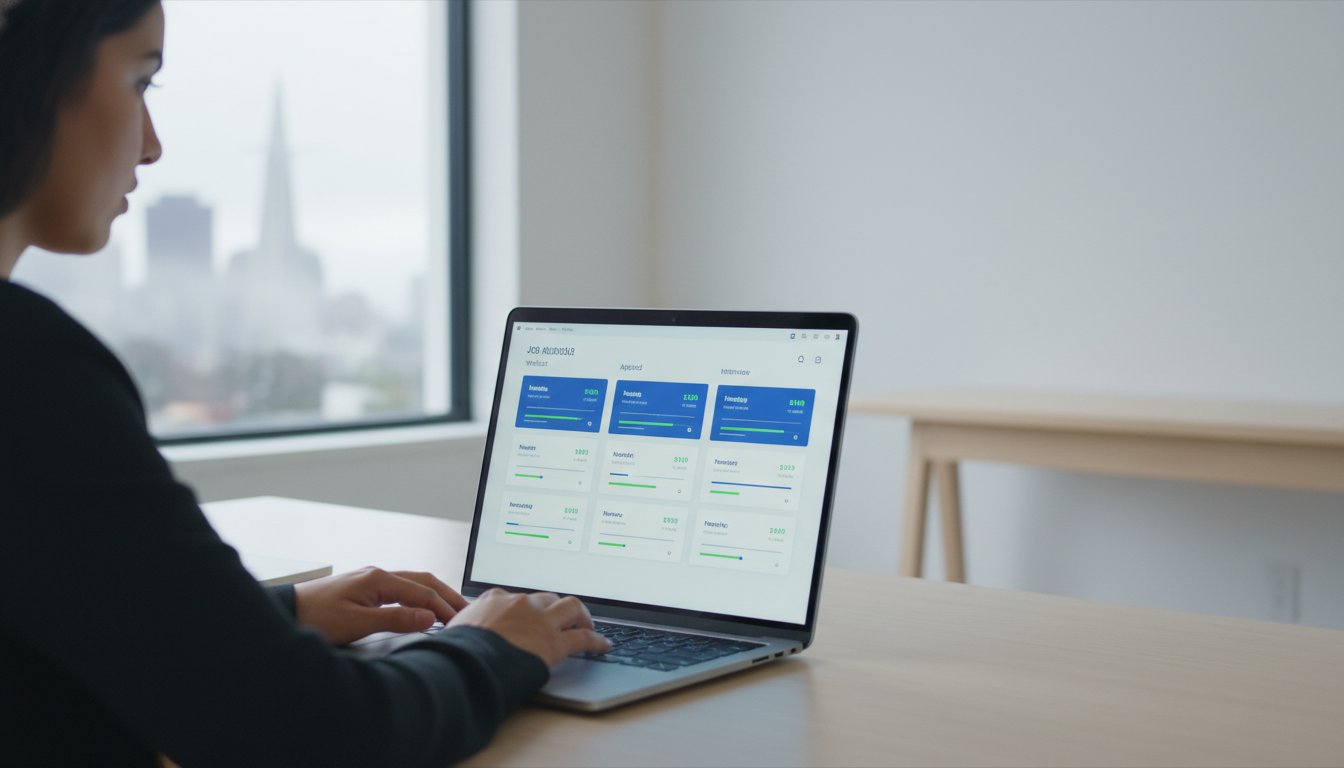
The job search is a high-stakes numbers game where 98% of Fortune 500 companies use automated filters to reject candidates before a human ever sees them. You're likely treating your career like a manual data entry task, wasting hours tracking my applications in messy spreadsheets or scattered browser tabs. It's frustrating to lose track of which resume version went to which recruiter, only to realize you missed a follow-up deadline by 48 hours. You already know that manual tracking is a bottleneck that kills your momentum and keeps you from the roles you deserve.
Stop letting your career progress disappear into a black hole. This guide shows you how to end the chaos and build a centralized command center for your job search. You'll learn how to leverage automation to increase your interview conversion rates by up to 3x while cutting manual data entry by 75%. We're diving into the exact stack you need to automate your workflow, synchronize your data, and finally manage your job search with the precision of a software engineer.
Key Takeaways
- Stop wasting time on manual tracking and build a centralized hub that automates your entire hiring pipeline.
- Replace static spreadsheets with a living dashboard that ingests job data instantly through AI-powered scrapers.
- Master the most efficient way to manage my applications to ensure no high-value opportunity ever slips through the cracks.
- Discover how to identify the specific resume keywords that trigger ATS "green lights" and accelerate interview invites.
- Leverage a high-tech secret weapon to automate the numbers game and apply while you sleep.
What is a Job Application Command Center?
Stop digging through browser history and scattered email folders. A Job Application Command Center is a centralized, automated hub built to track every stage of your hiring pipeline. Tech professionals can't rely on manual methods anymore. Modern job searches move too fast for that. You need a developer mindset; automate the tedious parts of the hunt to focus entirely on interview performance. Shift from passive tracking to active, AI-powered optimization. This system ensures you always know the status of my applications without the mental overhead of manual updates.
The Cost of Disorganized Application Tracking
Disorganized tracking kills your conversion rate. A 2023 survey found that 40% of candidates forget specific job details during a surprise screening call. This "application amnesia" makes you look unprepared. Inbox clutter leads to missed "Right to Represent" emails or recruiter pings that expire within 24 hours. Applying to the same company twice with different resume versions is another risk. It creates immediate red flags in a corporate database. Disorganization isn't just a nuisance; it's a strategic failure that costs you high-paying offers.
From Spreadsheet to Command Center
Manual data entry is the enemy of a high-volume job search strategy. If you spend 15 minutes updating a spreadsheet for every 10 applications, you're wasting hours every week. Most companies use a sophisticated Applicant Tracking System (ATS) to filter candidates before a human even sees a resume. You need a tool that mirrors this level of sophistication. A modern career dashboard provides real-time status updates and eliminates the need for manual logging. It allows you to manage my applications with the same precision you use for a code repository. A Command Center is a tool that links resume versions to specific job IDs.
How to Build an Efficient 'My Applications' Dashboard
Managing "my applications" manually is a legacy process that kills productivity. You need a command center, not a messy spreadsheet. Treat your job search like a deployment pipeline where every stage is monitored and optimized for speed. This isn't just about keeping a list; it's about building a high-velocity feedback loop that tells you exactly where your strategy is failing.
Choosing the Right Infrastructure
Stop using generic tools like Trello or Notion for high-volume searches. While these platforms handle basic lists, they lack the specialized logic required for a modern career hunt. You need a dedicated SaaS platform that supports resume versioning and contact logging out of the box. A developer-centric dashboard triggers automated status updates the moment an email hits your inbox. This ensures you are Mastering the Job Application Process: A Comprehensive How-To Guide rather than just reacting to it. Look for features that allow you to link specific Git repositories or portfolio versions to individual entries.
Automating Data Entry
Manual data entry is a 30-minute tax on your time that you can't afford. Use AI-powered browser extensions to scrape job requirements, salary ranges, and hiring manager names in one click. This tech-driven approach reduces the time spent per submission from 1,800 seconds to just 30 seconds. Set up "If This, Then That" (IFTTT) style triggers to log every submission into your dashboard automatically. You can even use these triggers to track the status of your application across different portals, ensuring your "my applications" list is always current without manual refreshes.
Efficiency doesn't stop at data entry. Follow these three steps to keep the pipeline moving:
- Categorize by Match Score: Use AI to compare your profile against the job description. Focus 90% of your energy on opportunities with a match score above 85%.
- Sync Your Calendar: Automate your follow-up reminders. If a recruiter doesn't respond within 72 hours, your system should automatically move the task to your "Action Required" column.
- Perform a Weekly Pipeline Audit: Every Friday afternoon, review your metrics. If 50% of your applications are stalling at the initial screening phase, it's time to refactor your resume keywords.
Building this infrastructure allows you to scale your efforts without burning out. When you use automated job search tools, you transition from a seeker to a strategist. You aren't just looking for work; you're managing a high-frequency trading floor for your talent.
Spreadsheets vs. Automated Trackers: The 2026 Comparison
90% of tech job seekers start their search with a pristine Excel sheet. By application 20, that sheet is usually a graveyard of outdated links and half-finished notes. Static spreadsheets are where momentum goes to die. They require manual input for every status change, every follow-up, and every rejection. This creates massive technical debt for your career. Managing my applications manually is a losing game in 2026. While a sheet looks clean at first, it lacks the living data required to win. Automated trackers don't just store data; they interpret it. They turn a list of names into a strategic roadmap.
The "simple is better" argument for spreadsheets ignores the hidden time-costs. Manual updates consume roughly 4.5 hours per week for the average developer. That is time you should spend coding or interviewing. Automated trackers provide insights, such as your Interview Rate per Resume Version, that spreadsheets cannot calculate without complex scripting. You need to know which version of your profile is actually converting.
The Limits of Manual Logging
Manual logging relies on human memory and tedious copy-pasting. When a company deletes a job posting, your spreadsheet link breaks. You lose the original requirements, making interview prep nearly impossible. Human error also plagues resume management. Managing multiple versions tailored to different tech stacks in a single cell is a recipe for disaster. You eventually send a Vue-heavy resume to a React-only shop. To fix this, you need a system that syncs your documents automatically. Use The 6 Best AI Resume Builders of 2026: Stop Building, Start Tailoring to ensure your files match your tracking data perfectly.
The Advantage of AI-Powered Insight
AI-driven dashboards provide a competitive edge through predictive analytics. These tools identify which companies are currently on a hiring spree based on real-time platform data. You can prioritize my applications based on actual probability rather than gut feeling. The most vital metric here is the Match Score. A Match Score is the algorithmic alignment between your verified skills and a job's requirements.
Stop guessing which roles are worth the effort. Platform data from 2025 shows that 74% of successful hires came from high-match roles identified by automation before the candidate even clicked apply. This level of optimization is impossible in a static environment. Stop acting like a data entry clerk. Use a tool built for the modern web and focus on the only metric that matters: the job offer.

Optimizing Your Queue: Moving from 'Submitted' to 'Interview'
Tracking 100 entries in my applications list doesn't get you hired. Optimization does. Your dashboard isn't just a spreadsheet; it's a feedback loop. Data from 2024 shows that applicants who tailor their keywords see a 300% increase in callback rates compared to those using a generic template. Use your dashboard to pinpoint which tech stacks trigger ATS "Green Lights." If your React applications get silence but your Node.js entries get hits, pivot your strategy immediately.
Efficiency requires a strict follow-up protocol. Set a 72-hour trigger in your tracker. Send a high-impact message to the hiring manager once that clock hits zero. Don't beg for an update. Offer a specific insight or a link to a recent project that solves a problem mentioned in the job description. This 72-hour window is the sweet spot where your name is still fresh but the recruiter is starting to narrow the pile.
Managing my applications effectively means knowing when to pivot. If a specific resume version hasn't converted into an interview after 15 submissions, the data is telling you to iterate. Stop repeating the same mistakes and start treating your job search like a sprint. You need to stay sharp by leveraging interview practice tools directly from your application dashboard. This keeps your technical knowledge current while you wait for the pings to start hitting your inbox.
Tailoring at Scale
Generic applications are the primary reason for a stalled dashboard. 74% of recruiters reject candidates who fail to mention specific company goals or requirements. You can't spend two hours on every cover letter, so let AI handle the heavy lifting. Generate role-specific cover letters while you sleep. This ensures every entry in your queue is a precision strike rather than a blind guess. Learn the full process in our guide on How to Tailor Your Resume to a Job Description: The 2026 AI Strategy.
Managing the Interview Stage
Move a card from "Applied" to "Interviewing" to trigger an automated prep kit. This transition requires a mindset shift from volume to depth. Store company research, recent funding rounds, and "questions for the interviewer" directly inside the application record. This eliminates the frantic search for notes five minutes before a call. For high-stakes technical rounds, use Final Round AI: Mastering the 2026 Interview with a Real-Time Copilot to maintain your edge and close the deal.
Stop managing spreadsheets and start optimizing your career growth with automated precision.
QuickApply: Your Centralized Career Command Center
Stop treating your job search like a manual QA test. QuickApply is the ultimate solution for managing my applications without the soul-crushing manual grind. It replaces fragmented spreadsheets and dozen-tab browser sessions with a unified, high-performance dashboard. By integrating an Application Tracker directly with an AI Resume Tailor, the platform ensures every submission is optimized for ATS filters without requiring hours of your time. You stop being the person who manually copies and pastes bullet points; you become the developer who deploys an automated job-seeking pipeline.
The "apply while you sleep" philosophy isn't a marketing gimmick. It's a technical necessity in a market where 250 candidates apply to a single role within the first three hours of posting. Automating the high-volume top of the funnel gives you a massive advantage over manual applicants. While others are stuck formatting PDFs and filling out repetitive forms, you're focused on technical interview prep or finishing your latest side project. QuickApply manages the logistics. You manage the code.
The QuickApply Workflow
The system prioritizes speed and precision. You can save any job posting with a single click and watch the AI tailor your resume instantly. The dashboard provides real-time tracking and match score visualization. This allows you to see exactly how well your profile aligns with the job requirements before you even hit submit. It doesn't stop at the application stage. Once the offer lands, you gain access to salary negotiation data and promotion roadmaps. This ensures your next move is a strategic career advancement rather than just another paycheck.
Why Tech Pros Choose QuickApply
QuickApply was built by engineers who understand that manual work is a failure of logic. It prioritizes optimization and speed above all else. Using this tool marks your shift from being a standard job seeker to a professional career manager. You are no longer at the mercy of the algorithm; you are the one leveraging it to your advantage. It's a high-tech secret weapon that turns a tedious process into a streamlined operation. Stop doing the busy work and start winning the numbers game. Get ahead of the curve and start automating your applications today.
Master Your Career Pipeline
Manual job tracking is a legacy system that no longer scales. By 2026, the gap between developers using spreadsheets and those using automated command centers will be insurmountable. You've seen how a centralized dashboard transforms the chaos of a job search into a streamlined deployment process. Managing my applications shouldn't feel like a chore; it's about optimizing your queue to move from "submitted" to "interview" with surgical precision. You've got the code skills, so it's time to apply that same logic to your professional growth.
QuickApply provides the high-tech secret weapon you need to win the numbers game. With AI-powered Match Scores for every role and automated resume tailoring that takes less than 15 seconds, you can focus on high-value networking instead of repetitive form fields. The platform includes a comprehensive tracker to manage your entire career transition, giving you a distinct competitive advantage in a crowded market. Don't let a slow process stall your momentum.
Stop the manual grind and automate your job search with QuickApply. You're ready for a role that matches your talent, and now you have the tools to secure it faster than ever.
Frequently Asked Questions
How do I see my applications on common job portals?
Access the Applied or Application History tab on platforms like LinkedIn or Indeed to see every submission instantly. On LinkedIn, navigate to the Jobs icon and select My Jobs to view 100% of your activity. These portals track your status automatically, revealing if an employer viewed your resume or downloaded your profile. It's the most efficient way to verify your progress without maintaining a separate manual log.
What is the best way to track job applications for free?
Use a digital Kanban board like Trello or a specialized tool like Teal to track my applications without spending a dime. These platforms allow you to move cards through stages like Applied, Interviewing, and Offer. According to 2023 industry benchmarks, organized candidates respond to recruiter pings 30% faster than those using manual methods. It keeps your pipeline visible, manageable, and ready for immediate action.
Should I use a spreadsheet or a dedicated tracker for my job search?
Choose a dedicated tracker over a spreadsheet to save 4 hours of tedious data entry every week. Spreadsheets require manual updates for every status change, which inevitably leads to data decay and missed opportunities. Modern trackers integrate directly with your browser to pull job descriptions and company data instantly. It's the best way to ensure your records remain accurate without the friction of manual typing or messy cell formatting.
How many applications should I be managing at once in tech?
Aim to manage a pipeline of 20 to 50 active applications to maintain a consistent interview flow. Data from the 2024 Tech Hiring Report suggests that a 2% to 5% response rate is standard for mid-level developers. If you have 40 active leads, you'll likely juggle 2 or 3 interviews simultaneously. Focus on high-volume automation to keep these numbers steady without hitting a wall or burning out during your search.
Can I automate the follow-up process for my applications?
Automate your follow-up process by using email sequencing tools like Mixmax or HubSpot. Set a trigger to send a polite nudge 5 business days after your initial submission if you haven't received a response. This systematic approach ensures you never miss a connection or let a lead go cold. Automation keeps your name at the top of the recruiter's inbox while you focus on technical assessments and coding challenges.
How do I organize different resume versions for multiple applications?
Use a Git-style version control system or a cloud folder labeled by job role and date to keep your documents straight. Name your files using a clear convention like Name_DevOps_2024.pdf to avoid sending the wrong version. When I review my applications, having a clear link between the job description and the specific resume version used is vital for interview preparation. It prevents confusion during the high-pressure screening call.
What should I do if my applications are not getting any responses?
Audit your resume against ATS filters and increase your application volume immediately if you aren't seeing results. If your response rate is below 1%, your resume likely lacks the 5 to 10 specific keywords required for your target role. Use AI-driven optimization tools to align your profile with the job description. Speed is your ally; applying within the first 24 hours of a posting increases your visibility by 4x.
Is it safe to use AI to manage and tailor my applications?
Using AI is a safe and necessary strategy for staying competitive in the 2024 job market. Over 70% of Fortune 500 companies use AI to screen candidates, so using it to tailor your responses simply levels the playing field. Ensure your AI-generated content remains factual and reflects your actual experience. It's a tool for efficiency and optimization, not a replacement for your genuine technical skills or professional personality.


