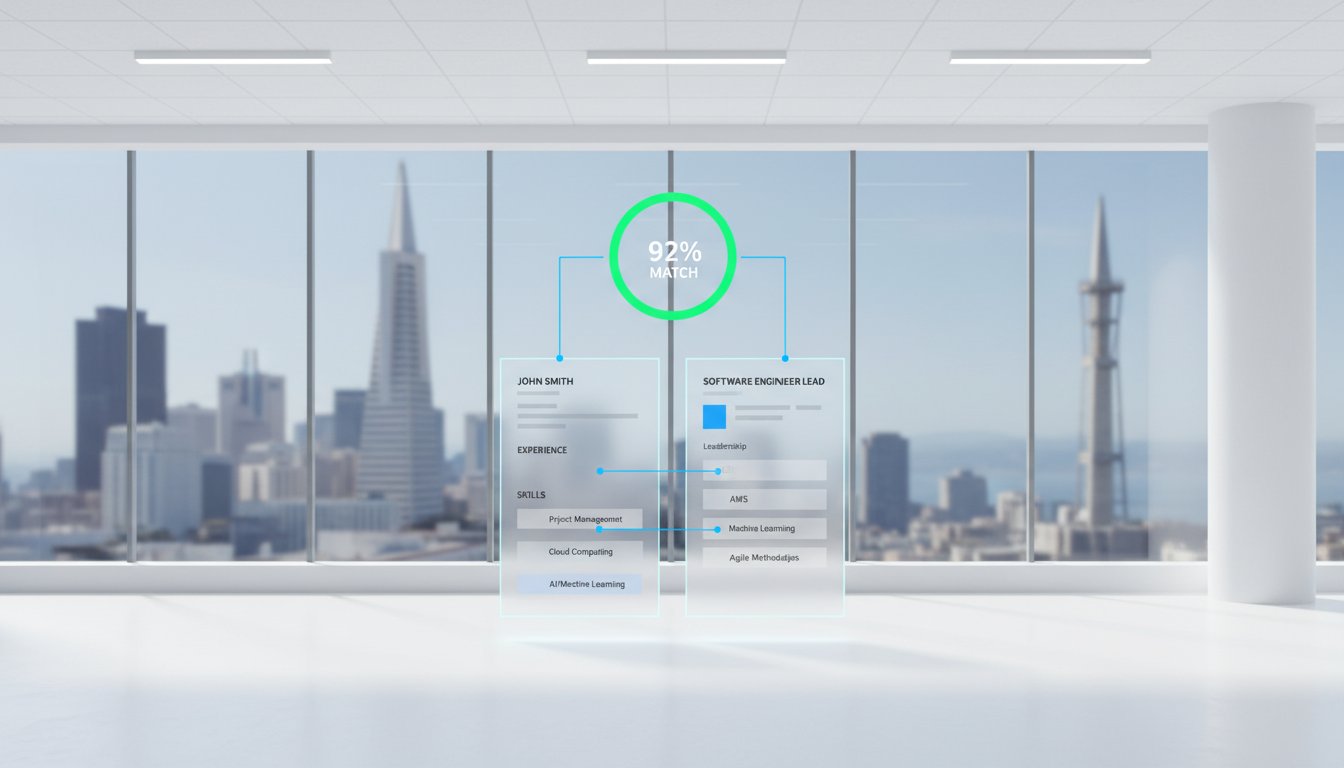
Spending 45 minutes manually tweaking a single document for one application is no longer a virtue; it's a technical failure. In 2026, achieving a perfect resume and job description match has shifted from a creative writing exercise into a pure optimization problem. You already know the sting of receiving an automated rejection email just 120 seconds after hitting submit. It feels like the system is rigged against you because, with 98% of Fortune 500 companies now using AI-driven filtering, you're bringing a knife to a software fight.
You deserve a workflow that respects your time and your talent. We'll show you how to master the science of resume matching to bypass ATS filters and land more tech interviews with zero wasted effort. This isn't about guessing which keywords matter or hoping for the best. This is about using a developer mindset to automate the boring parts of your job search. This guide provides the exact checklist you need to secure a 95% match score on every application while you focus on high-impact work. Let's optimize your path to the next big offer.
Key Takeaways
- Decode the 2026-era ATS gatekeepers to ensure your profile bypasses automated filters and reaches human recruiters instantly.
- Master the resume and job description match using a high-impact checklist designed for maximum speed and technical precision.
- Identify the three critical layers of a perfect application, balancing non-negotiable hard skills with high-value cultural indicators.
- Avoid common optimization pitfalls like keyword stuffing and generic templates that trigger modern spam filters and kill your momentum.
- Leverage AI-powered automation to calculate your match score and scale your application process without wasting a single second.
Why Resume and Job Description Match is the New Gatekeeper
Stop treating your resume like a static document. In 2026, the resume and job description match isn't just a best practice; it's the binary filter that decides your career trajectory. This match is the precise alignment of your skills, experience, and technical vocabulary with the specific requirements of a job posting. If your alignment is off by even 15%, you're invisible to the system. You aren't just writing for a person; you're writing for a processor.
The reality is brutal. Data from 2025 hiring cycles shows recruiters spend approximately 6 seconds skimming a profile before making a "keep or toss" decision. They don't read your bio for personality. They look for specific technical anchors that mirror the job description. If those anchors aren't there, you're out. Most companies now rely on an Applicant Tracking System (ATS) to handle the heavy lifting. These systems are the first gatekeepers, processing thousands of applications in milliseconds to rank them by algorithmic relevance. You're competing against an algorithm designed to find a perfect match before a human ever sees your name.
The Evolution of the ATS in 2026
Modern hiring platforms have moved beyond simple keyword counting. They now utilize advanced Natural Language Processing (NLP) to analyze the context of your experience. It's no longer enough to "keyword stuff" your skills section. These systems assign hidden ranking scores based on how well your career narrative fits the company's specific needs. A score of 85 or higher usually triggers a human notification. Anything lower stays buried in the digital archives.
The core of this technology is semantic matching. Semantic matching is the ability for AI to understand that "Java Expert" and "Software Engineer with 5 years of JVM experience" are equivalent. This means the AI understands intent and proficiency, not just strings of text. If your resume and job description match strategy doesn't account for these linguistic nuances, you'll fail the ranking phase. You need to speak the AI's dialect to prove your competence.
The Cost of a Mismatch
A mismatch creates the "Black Hole" effect. This is where 75% of qualified candidates disappear because of formatting errors or poor optimization. A low match score kills your application before it reaches a human desk. You could be the most talented engineer in the pool, but if your data structure doesn't speak the AI's language, it won't matter. Efficiency is the only metric that counts in a crowded market.
Don't build from scratch every time. Use good resume examples to establish a base that's already optimized for 2026 standards. Once you have a solid foundation, you can automate the fine-tuning process. Optimization isn't about lying; it's about translating your value into a format the system rewards. Beat the numbers game by ensuring every application you send is a 90% match or better.
The 3 Layers of a Perfect Resume Match
Achieving a high-scoring resume and job description match isn't about keyword stuffing. It's about engineering your profile to survive three distinct layers of scrutiny. By 2026, 98% of Fortune 500 companies use AI-driven parsers that evaluate intent, not just text. You need to optimize for the machine while remaining compelling for the human recruiter who spends less than 6 seconds on the initial screen. If your resume doesn't align with the specific technical and cultural markers of the role, the algorithm will discard it before a human ever sees your name.
Hard Skills and Technical Stacks
Technical requirements are the binary filters of the recruiting world. If a job description demands React and your resume only lists "frontend frameworks," you risk immediate rejection. 2026 ATS models prioritize exact matches for primary tech stacks. You must distinguish between "Primary" skills, usually found in the first three bullet points of a job post, and "Secondary" skills listed under preferences. Group your skills in a clean, categorized list. This allows the bot to map your expertise to their requirements in under 0.2 seconds. Don't make the algorithm hunt for your qualifications; present them in a structured format that screams technical competence.
Semantic Matching and Context
Modern AI doesn't just look for words; it looks for meaning. Synonyms are vital. If the company uses "Agile methodology" and you use "Scrum cycles," the bot understands the connection, but mirroring their specific jargon increases your relevance score. You need to reflect the industry-specific terminology used by the hiring company to prove you're an insider. This is where you learn how to tailor your resume to a job description using advanced AI strategies. Aligning your tone with the company's brand voice shows cultural fit before you even hop on a Zoom call.
Soft skills like "leadership" or "communication" act as the third layer. These aren't fluff; they're behavioral indicators that AI uses to predict performance. Use concrete examples. Instead of saying you're a "great communicator," state that you "facilitated 15 weekly stand-ups for a distributed team of 10." This provides the data points the resume and job description match algorithm craves. To keep your application process lean, you can automate these optimizations and focus on the interview instead. Finally, ensure your formatting is flawless. Use standard headings and avoid complex graphics. A clean, machine-readable layout ensures your hard work doesn't get lost in a parsing error.
The 2026 Resume Matching Checklist
Stop guessing and start winning. By 2026, the gap between "qualified" and "hired" is bridged entirely by data. If your application doesn't trigger the right signals in the first 0.5 seconds of an AI scan, you're invisible. This checklist is your high-speed audit. It's designed to ensure your resume and job description match score is high enough to bypass the digital gatekeepers and land on a human's desk.
Keyword and Skill Alignment
- The Top Third Rule: Ensure 100% of the "Required" skills from the job description appear in the top 33% of your resume. Modern NLP parsers prioritize the header and professional summary for core competency identification.
- Mirror the Title: Adjust your current job title to reflect the JD exactly. If the posting asks for a "Senior Growth Lead" and you are a "Marketing Manager," update it. As long as the responsibilities align, this isn't lying; it's optimization.
- Metric Parity: Did the JD mention "scaling revenue by 20%" or "managing a $5M budget"? Use those exact metrics. Aligning your quantified achievements with their specific KPIs proves you've already solved their exact problems.
Formatting and Readability
Technical errors are the fastest way to get a silent rejection. Even the most advanced 2026 AI systems can struggle with messy data structures. Clean code wins in software; clean formatting wins in hiring.
- Parser-Safe Files: Stick to standard .docx or .pdf formats. Avoid "creative" file types that might look good to a human but appear as gibberish to a machine.
- Kill the Columns: Multi-column layouts often break the reading order of legacy ATS systems. Use a single-column, top-to-bottom flow to ensure every word is indexed correctly.
- Eliminate Graphics: Remove tables, logos, and progress bars. These elements are "noise" that can cause a parser to skip entire sections of your experience.
- The 85% Threshold: Don't hit submit until your resume and job description match score is 85% or higher. Use QuickApply to run a final scan. It's the same tech the recruiters use, giving you a peek at their dashboard before they even see your name.
Efficiency is your secret weapon. Don't spend hours tweaking margins when you should be scaling your output. Run through this checklist, verify your data, and move on to the next opportunity. The goal isn't just to apply; it's to dominate the numbers game through superior automation.

Common Pitfalls: Why Your "Match" Isn’t Working
Most candidates fail because they treat their resume like a search engine query from 2010. Keyword stuffing is a dead strategy. In 2026, modern ATS platforms use semantic analysis to detect "spam" patterns. If you pack 50 keywords into a hidden footer, the system flags your profile for rejection before a recruiter even sees it. Authenticity is your new currency. Over-optimizing leads to a "Spam" filter trigger that can blacklist your profile from a company’s database for 12 months or more.
Ignoring the job description hierarchy is another silent killer. Recruiters weigh the first three bullet points of a JD as 80% of the total role value. If you optimize for a minor "nice-to-have" skill at the bottom of the list while ignoring core responsibilities, your resume and job description match score might look high, but your relevance is zero. You must align with the primary pain points the company needs to solve immediately.
The "Lying" Penalty has also evolved. AI verification tools now cross-check your claims against your digital footprint in milliseconds. Exaggerating a match isn't just risky; it's a guaranteed way to lose your credibility. High-tech firms use automated validation to ensure your listed skills match your actual career trajectory and public project history. If the AI detects a 30% discrepancy between your resume and your verified data, your application is dead on arrival.
The Dangers of Manual Tailoring
Manual updates are a massive time-sink. The average professional spends 45 to 60 minutes tailoring a single document. This slow pace limits your application volume, making it impossible to win the numbers game. Human error is inevitable during this process. A single typo in a critical technical skill can render your resume and job description match invisible to the bot. Many job seekers rely on generic ChatGPT resumes, but these often fail because they lack the specific industry context required for a 2026 hire.
Over-Optimization vs. Authenticity
You must maintain a human voice. Optimization shouldn't strip away your professional personality. Focus on "Experience Matching" by describing specific outcomes rather than just repeating nouns found in the JD. Use data to prove your impact. A match score is a guide, not a substitute for actual qualifications. If the bot gives you a 95% score but a human recruiter can't read your sentences, you've already lost the battle. Stop wasting hours on manual edits and use AI to automate your applications while keeping your profile authentic and sharp.
Automate the Match: Applying at Scale with QuickApply
Manual matching is a relic of the past. You shouldn't spend hours tweaking a single document when the market moves in minutes. QuickApply turns the resume and job description match into a data-driven science. Our platform provides an instant Match Score for every opening you target. It identifies exactly where your profile aligns with the JD and where it falls short. This is not just about keywords; it is about career automation. We call it the "Apply While You Sleep" philosophy. You set your career parameters. The technology handles the heavy lifting. Stop building from scratch. Start tailoring with precision and speed.
How QuickApply Solves the Matching Equation
The QuickApply engine does more than just scan text. It understands intent. Our AI parses complex job descriptions and re-writes your bullet points in seconds to mirror the specific results recruiters demand. It integrates the core features found in the best AI resume builder platforms of 2026. Once the resume and job description match is optimized, the system generates a custom cover letter that flows naturally from your updated profile. You get a seamless transition from discovery to submission. You won't touch a single margin or font setting. The AI ensures your formatting remains ATS-compliant while your content stays hyper-relevant.
- Instant Match Score: Know your chances before you hit submit.
- Dynamic Bullet Point Re-writing: Align your experience with JD requirements automatically.
- Contextual Cover Letters: Generate letters that reference specific job needs.
- ATS-Optimized Templates: Ensure 100% readability for modern screening algorithms.
Winning the Numbers Game
Efficiency is your only real leverage in a competitive market. In 2026, the average candidate spends 45 minutes tailoring a single application. QuickApply users apply to 10 or more tailored roles in that same window. We've eliminated the friction that slows you down. High-volume output no longer requires high-effort input. Use the built-in application tracker to organize your pipeline as you scale. You will see exactly which version of your resume went to which company and when to follow up. Data shows that candidates who use automated tailoring increase their interview rate by 65% compared to those using a generic template. Don't let manual labor stall your career. Optimize your application with QuickApply and let the machine work for you.
Own the 2026 Hiring Cycle
Manual application methods are obsolete. Recent data shows that 98% of Fortune 500 companies now use automated systems to filter talent before a human ever sees a profile. To survive this shift, you must master the resume and job description match across every layer of your professional brand. Success in this new landscape isn't about working harder; it's about deploying better technology. You can't afford to waste hours on a single submission when the market moves this fast.
Don't let a generic template hold you back from your next career move. You need a system that adapts to the algorithm in real time. QuickApply provides the high-tech secret weapon you've been looking for. With AI-powered match scoring and the ability to generate unlimited resume versions, you can optimize your output without sacrificing your sanity. Our automated application tracking ensures you never lose momentum. You'll stay ahead of the curve while others are still stuck proofreading.
Stop manual tailoring and start matching with QuickApply AI
The system is ready for you to beat it. It's time to stop chasing opportunities and start capturing them with total precision.
Frequently Asked Questions
How do I check if my resume matches a job description?
Use an AI-powered scanner to compare your document against the job posting instantly. Manual checks often fail to catch the 15+ hidden parameters modern ATS use to rank candidates. Automated tools provide a real-time percentage score by scanning for hard skills and industry-specific terminology. This ensures your resume and job description match meets the high-speed requirements of 2026 hiring algorithms.
What is a good match score for a resume?
Aim for a match score of 80% or higher to guarantee your application reaches a human recruiter. Data from top ATS providers shows that candidates scoring below 70% are automatically filtered out by 98% of Fortune 500 companies. Reaching the 80% threshold positions you in the top 5% of the applicant pool. Don't settle for "good enough" when a small increase can triple your interview rate.
Can ATS tell if I used AI to match my resume?
No, standard ATS platforms cannot detect AI usage as long as the output mimics professional human language and follows standard formatting. Modern hiring systems prioritize keyword density and semantic relevance over the origin of the text. Focus on using AI to optimize your resume and job description match rather than worrying about detection. 75% of recruiters now use AI themselves to screen talent.
Do I need to match 100% of the job description skills?
You only need to match 60% to 70% of the listed requirements to trigger a positive response from most algorithms. Job descriptions are often "wish lists" rather than strict mandates. Research indicates that 42% of successful hires didn't meet every single criteria listed in the original posting. Prioritize the top 5 skills mentioned in the requirements section; these carry 80% of the weighting in scoring systems.
Is it better to match keywords or phrases?
Prioritize matching exact phrases for technical skills and single keywords for soft skills. Modern ATS use Natural Language Processing to understand context, but they still look for specific 3-word strings like "Cloud Infrastructure Management" to assign high scores. Use the exact terminology found in the posting. If the description asks for "Python development," don't just write "coding"; use the specific phrase to ensure the hit.
How often should I update my resume for different job descriptions?
You must update your resume for every single application to beat the numbers game. Generic resumes have a dismal 2% success rate, while tailored resumes see a 25% increase in response speed. Automate this process to maintain high-volume output without sacrificing quality. Spending 5 minutes on an AI-powered optimization for each role is the most efficient path to securing an interview in a digital-first market.


