

Being overqualified doesn’t have to end your candidacy. If you’re deciding what to do when you’re overqualified for a job but still want it, address the employer’s likely concerns directly: explain why the role fits, set clear salary expectations, and show how your experience will help you succeed in its day-to-day work.
It’s reasonable to expect questions about whether you’ll stay, feel challenged, accept the salary, or work well with the team. You don’t need to hide your experience. Answer those concerns with a clear, grounded explanation rather than a defensive pitch.
Use these four strategies to make your interest credible and your qualifications relevant. Address concerns about retention and salary, prepare for interview questions, explain why this specific role appeals to you, and connect your additional skills to the employer’s needs. The goal isn’t to minimize your experience. It’s to show why you want this job and how you’ll contribute.
Key Takeaways
- Address concerns about salary and retention by being clear about your expectations and why this role fits your goals.
- Prepare concise interview answers that show you’re comfortable with the role’s responsibilities, manager, and team.
- Explain why this specific opportunity appeals to you, rather than relying on a general statement about wanting a change.
- Connect your extra experience to practical ways you can contribute, and tailor your application to the position’s needs.
1. Addressing concerns about retention and salary
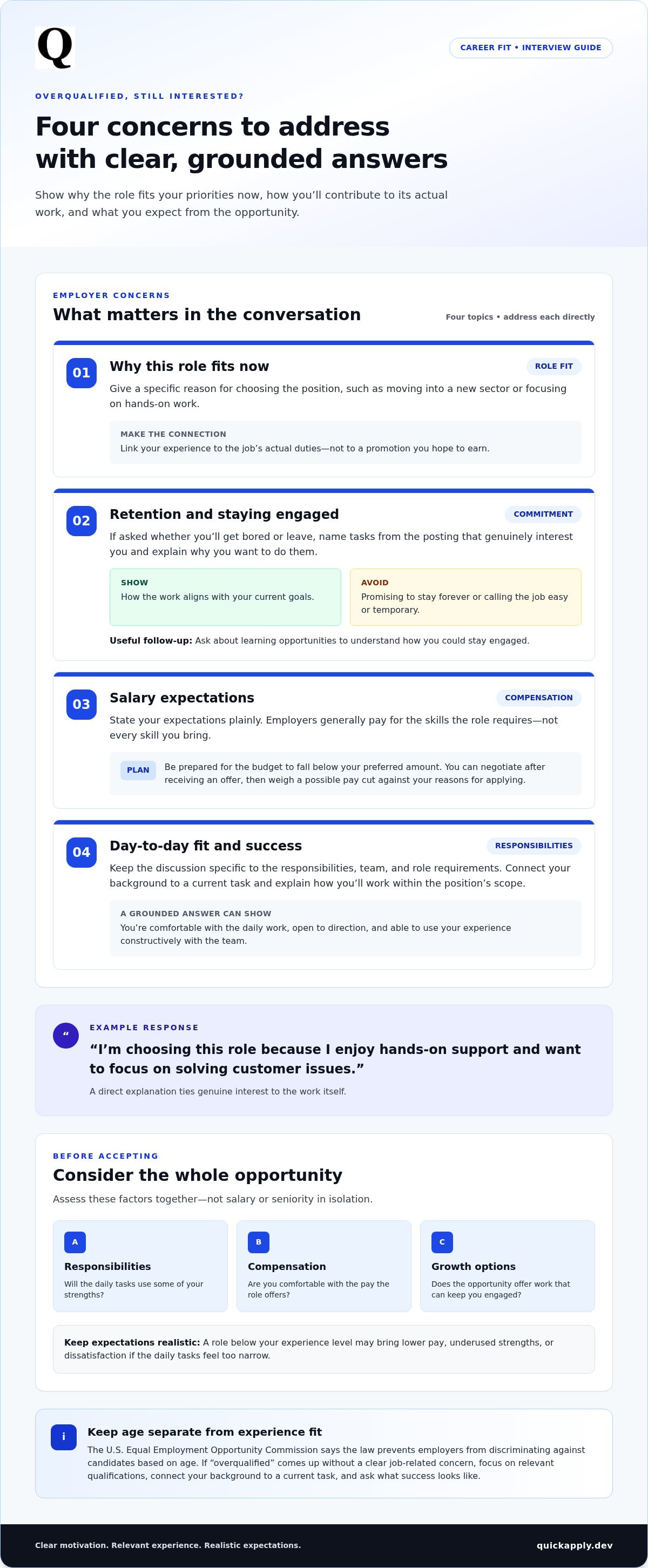
An employer may worry that investing in an experienced hire will be wasted if a more senior opportunity comes along. A practical answer to what to do when you're overqualified for a job but still want it is to explain why this role fits your priorities now. Give a specific reason, such as moving into a new sector or focusing on hands-on work. Then connect your experience to the job’s actual duties, not to a promotion you hope to earn.
If an interviewer asks whether you’ll get bored or leave quickly, answer directly. Point to tasks in the job posting that interest you and explain why you want to do them. For example, say, “I’m choosing this role because I enjoy hands-on support and want to focus on solving customer issues.” Don’t promise to stay forever. Instead, show how the work aligns with your current goals. Ask about learning opportunities to understand how you could stay engaged.
Be just as clear about salary. Employers generally pay for the skills a role requires, not every skill you bring. State your expectations plainly and be prepared for the budget to fall below your preferred amount. You can negotiate after receiving an offer, but weigh a possible pay cut against your reasons for applying. When considering what to do when you're overqualified for a job but still want it, assess the responsibilities, compensation, and growth options together before accepting. A role below your experience level may mean lower pay, underused strengths, or dissatisfaction if the daily tasks feel too narrow.
Age is separate from experience fit. The U.S. Equal Employment Opportunity Commission says the law prevents employers from discriminating against candidates based on age. If an interviewer raises “overqualified” without a clear job-related concern, keep your response focused on the role’s requirements. Give a concise example of how your background supports a current task, then ask what success looks like. That keeps the discussion specific and helps you evaluate whether the position fits your priorities.
2. Common interview questions for overqualified candidates
An interviewer may ask, “Why do you want this role?” or “Won’t you get bored?” They want to know whether you’re interested in the day-to-day work, not just capable of doing it. Name a specific task from the posting and explain why it appeals to you. For example: “I enjoy solving customer issues, and this position lets me focus on that work.” Don’t describe the role as easy or temporary.
Prepare for questions about salary, career direction, and changes in your path. An employer may worry that your market rate exceeds the budget or that you’ll leave for a senior opening. They may also wonder how you’ll respond to direction from a less experienced manager. Give clear, grounded answers: explain your salary expectations, show how you collaborate, and describe why the role’s scope suits you. If the move looks like a step backward, explain your decision rather than leaving the interviewer to guess.
Employers may reject an experienced candidate because they anticipate boredom, dissatisfaction, turnover, or disruption to the team. A small organization with limited advancement options may have fewer ways to keep that person engaged. Address the concern by explaining how you’ll contribute within the role’s responsibilities and respond to feedback. Give a brief example, such as following a manager’s direction on a project while sharing relevant expertise constructively.
The label “overqualified” can also stand in for assumptions about age, rather than a clear assessment of job fit. Keep your answer focused on relevant qualifications and motivation. Before the interview, identify two responsibilities you genuinely want and prepare one example showing your ability to work collaboratively. Rehearse concise answers with interview practice so your experience comes across as useful, not as a reason to question your commitment.
3. Explaining your interest in a lower-level role
Explain your choice through the work, not the title you’re leaving. Name responsibilities in the posting that appeal to you, then connect them to what you want next. For example, you might be seeking more direct customer contact or a move into a different sector. Specific reasons make your decision sound considered, not like a temporary stop while you wait for a promotion.
A career pivot can make a lower-level position a practical entry point. In one example, a marketing professional with 15 years of experience applied for a product role after leading large teams for the previous 5 years. She could explain how she wanted to focus on product work, then connect her team leadership to collaborating across functions. Use your own story: identify the change, explain why it matters, and show how the role fits.
Explain your motivation in the cover letter, not just in the interview. Say why this specific job interests you and link your experience to its listed responsibilities. Avoid calling yourself “overqualified.” Instead, describe the skills you’ll use and the work you’re ready to do. If your résumé shows a career shift, use the letter to clarify your direction without apologizing for your experience.
Show that you’re comfortable with the responsibilities and reporting structure by describing how you’ll follow priorities, accept feedback, and collaborate with your manager. For example, explain that you’ll align on deadlines first, then share ideas when they support the team’s goals. Before accepting, consider whether the role uses some of your strengths and offers work that will keep you engaged. A clear connection between your motivation and the daily tasks makes your career move easier to understand.
4. Demonstrating the value of additional skills
Additional experience helps when employers can see how it meets their needs. Start with a responsibility in the posting, then explain how a relevant skill supports it. For a support role, describe how your troubleshooting experience helps identify recurring customer issues. For an administrative position, explain how organizing complex projects can keep schedules and handoffs clear. Focus on useful outcomes, not seniority.
Make your résumé easy to scan against the job description. Prioritize required skills, use straightforward language, and trim details that distract from your fit. If an engineering degree isn’t needed for a technician role, consider whether emphasizing it helps explain your value. Keep your education and experience accurate, but lead with qualifications tied to the job. A focused résumé makes your match easier to see.
Use a specific example in your interview. Describe the situation, the action you took, and the result for the team or customer. For instance, explain how you documented a recurring process so colleagues could follow the same steps. Then connect that experience to a task in the new role. This shows what your skills can contribute without implying that you expect to redesign the position or take over a manager’s responsibilities.
Broader experience may also help you learn the organization’s tools and processes faster, while preparing you to take on related responsibilities as needs change. Present that as potential value, not an assumption that the role will expand. Ask which skills matter most during the first stage of the job, then tailor your examples to those priorities. Build a role-specific cover letter that links your strongest qualifications to the position’s actual requirements.
QuickApply: Resume Tailoring
QuickApply helps you shape a focused application for a specific role. Use Resume Tailoring to align your résumé with the job description and highlight relevant skills without letting unrelated experience dominate. The match score can help you assess how well roles fit your background, while Cover Letter Generation helps you explain why a position appeals to you. Use these tools to reflect the reasons and strengths you’ve identified.
You can also use Interview Practice to prepare clear answers about your motivation, and the Application Tracker to organize your job search. Visit quickapply.dev to explore QuickApply.
Make your next application count
A practical answer to what to do when you're overqualified for a job but still want it is to treat each application as a deliberate match, not a compromise. Choose a role you can genuinely see yourself doing, then make your interest clear in your résumé, cover letter, and interview answers. Keep your motivation consistent while adapting the details to each opportunity.
QuickApply supports each step of that process. Resume Tailoring aligns your résumé with a specific job description, Cover Letter Generation helps communicate your motivation, and Interview Practice lets you rehearse how you’ll explain your choice. Use the tools to organize your preparation, then refine your message so it sounds like you and fits the role.
Ready to streamline your application process? Contact QuickApply for job search support. Your experience can open a path into work that fits your priorities. Take the next step with focus and confidence.
Frequently Asked Questions
What Do I Do if I’m Overqualified for My Job?
Before changing your application, decide whether the role fits your current priorities. Compare its core duties with the work you want to do, the compensation you can accept, and the skills you want to keep using. Then adjust your résumé to foreground relevant experience and prepare a direct explanation of your interest. If the daily work doesn’t suit you, target a better fit instead.
How do you explain why you want a job you're overqualified for?
Connect your reasons to the employer’s actual work. For example, explain that you’re moving into a new field and want this position’s direct experience with its customers or tools. Say why you’re applying now, such as wanting to focus on a particular responsibility instead of managing a broader portfolio. Keep your explanation consistent across your application and interview, and don’t frame the job as a temporary fallback.
How can you tailor your resume for a role below your experience level?
Use the job description as an editing filter. Move matching skills and relevant accomplishments near the top, then shorten details that don’t support your application. If the position emphasizes troubleshooting, lead with an example of resolving a technical issue rather than a broad leadership summary. Keep dates, titles, and qualifications accurate. The goal is a sharper match, not a smaller or misleading version of your work history.
Should you remove senior titles or accomplishments from your resume when applying?
Keep official job titles accurate, but add context if a title obscures your hands-on work. For example, after a “Director” title, briefly describe relevant individual contributions. Select accomplishments that match the position’s responsibilities and remove unrelated details when space is limited. Don’t erase experience to appear less qualified. Make the relevant parts easy to find and understand.
How do you negotiate salary for a job you're overqualified for?
Discuss compensation after receiving an offer, and assess the full package alongside the role’s duties and growth prospects. If the offer falls short of your expectations, explain the value you bring and make a clear counterproposal based on your priorities. Decide in advance which trade-offs you can accept, including whether the responsibilities justify a lower salary. Be prepared for the employer’s budget to limit flexibility.
What should you say about compensation expectations in an interview?
Give a clear, considered answer that reflects the role’s scope and your needs. You might say, “I’m open to discussing compensation based on the responsibilities and overall package. My priority is finding a role that fits my experience and goals.” If you have a firm minimum, decide on it before the interview. Don’t suggest you’ll accept any amount just to secure the position.


