

You don’t owe anyone a full status report. When someone asks how the search is going, give a brief, honest update, then say what support would help or set a boundary if you’d rather keep details private. Knowing what to say when people ask how the job search is going starts with deciding how much you want to share.
It can be frustrating to repeat the same update, especially when your search is still underway. But the question may come from someone who cares, not someone measuring your progress. You can keep the exchange on your terms without pretending everything is perfect or shutting out useful support.
Choose a simple response that fits the moment: share a quick update, ask for a specific introduction or piece of advice, or explain the role and industry you’re targeting. These examples cover different situations, help you assume good intentions without dismissing your feelings, and make it easier for people to offer useful help. The goal is a clear update that protects your energy and keeps helpful connections moving.
Key Takeaways
- Share a brief, honest update, and decide in advance how much detail you’re comfortable giving.
- Turn a check-in into useful support by asking for a specific introduction, connection, or piece of advice.
- Consider that the person may be asking because they care, while still setting boundaries if the question feels uncomfortable.
- Name the roles or industry you’re targeting so people can offer more relevant leads and introductions.
1. Giving a general update about an ongoing job search
Decide on a truthful update before the next conversation, then keep it brief. For example: “I’m still looking for the right role and staying open to good opportunities.” If things are moving forward, say, “I’ve applied to several roles and feel optimistic about upcoming interviews.” The wording can vary; a useful structure is your status, next step, and a clear stopping point.
When friends or family ask, answer warmly without turning the conversation into a full report. Try: “I’m still searching, and I’ll share news when I have a solid prospect. How have you been?” If you want help, make one specific request, such as an introduction to someone in your target field. A polite, direct answer tells people what would actually be useful.
For recruiters or professional contacts, give a concise, accurate snapshot of your search. You could say, “I’m interviewing for product design roles and considering a few opportunities.” Share only the details that help move the conversation forward. If asked about an opportunity you can’t discuss, say, “I’m not in a position to share those details.”
Repeated questions call for a boundary, not a new explanation each time. Tell a close friend, “I know you’re checking in. I’ll update you when something changes, so I’d rather not review the search every time we talk.” If you prefer more privacy, say you’ll share news after accepting an offer. Then follow through when your status changes.
For a quick update without a follow-up, use one sentence: “The search is ongoing, and I’m focused on roles that fit my experience.” If someone presses, repeat a brief, positive answer rather than adding details you’d rather keep private. A smile can help keep the exchange relaxed; then redirect with a question or a lighthearted story.
Match your response to the person and setting. A recruiter may need to understand your interview progress, while family may simply want reassurance. Prepare a brief version for casual conversations and a more specific one for professional contacts. That small step makes each update easier to give and keeps you in control.
2. Turning job-search questions into requests for support
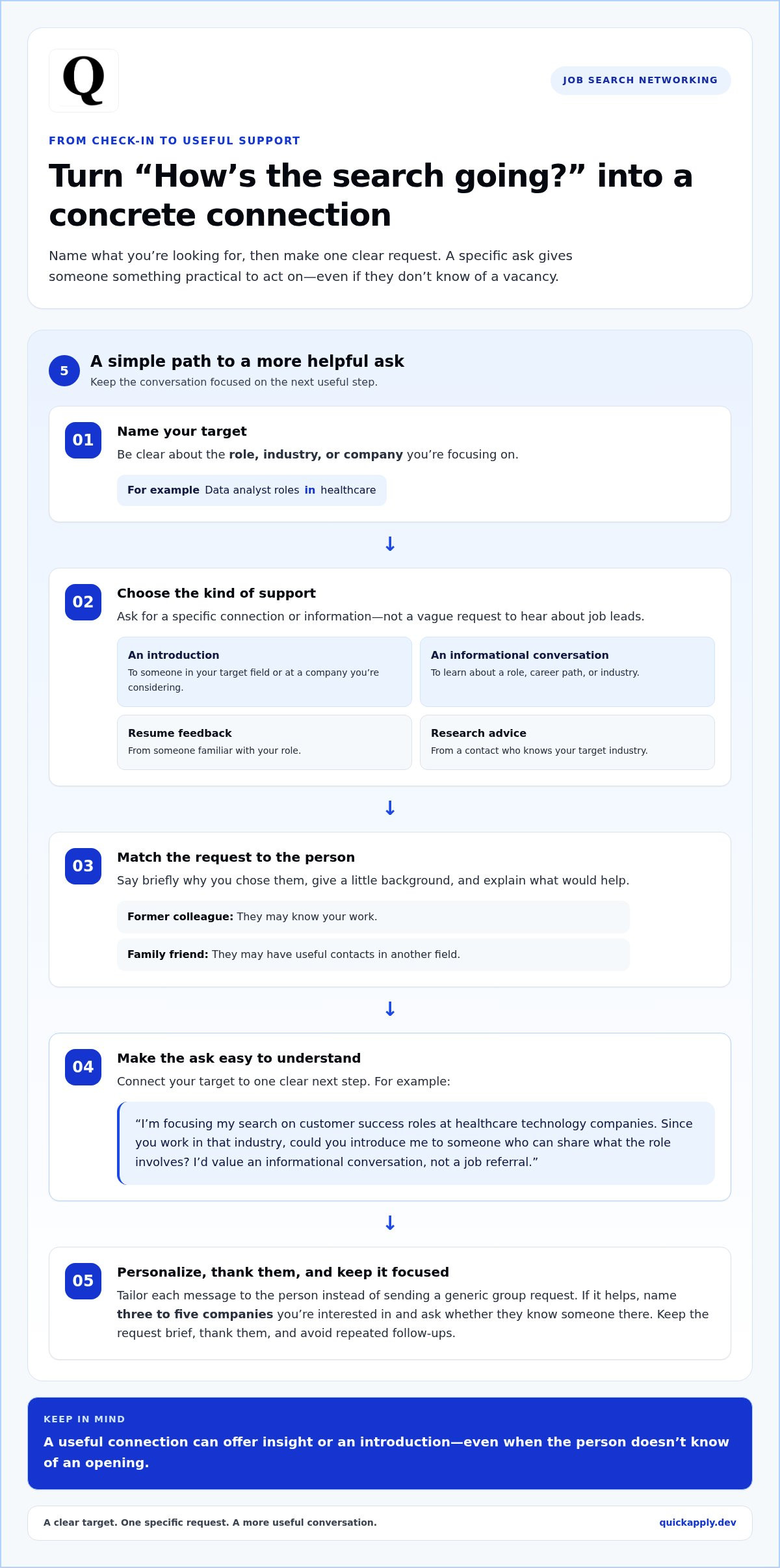
Use a check-in to make one clear request instead of asking vaguely for job leads. Tell the person your target role, industry, or company, then explain the next step that would help. For example: “I’m targeting data analyst roles in healthcare. Do you know someone I could speak with about their career path?” A specific ask gives your network something concrete to act on.
Focus on information and introductions, rather than a general request to hear about openings. Ask whether a contact can introduce you to someone in a particular field or arrange an informational conversation with an industry professional. If you’re speaking with someone well-connected, ask whether they know anyone at a company you’re considering. They may be able to offer a useful connection even if they don’t know of a vacancy.
Personalize each message to the person’s experience. A former colleague may know your work, while a family friend may have useful contacts in another field. Explain why you chose them, briefly summarize your background, and specify the support you want. Ask for resume feedback from someone familiar with your role, or research advice from a contact who knows your target industry.
Try this sample: “Hi Maya, I’m focusing my search on customer success roles at healthcare technology companies. Since you work in that industry, could you introduce me to someone who can share what the role involves? I’d value an informational conversation, not a job referral. I’ve attached my resume for context. Thanks for considering it.” Replace Maya, the role, and the request with details that fit your contact.
If you’re messaging several people, tailor each note rather than sending a generic group request. You can name three to five companies you’re interested in, then ask whether the person knows someone there. Keep the request brief, thank them for their help, and avoid repeated follow-ups. To keep application messaging focused on each target role, prepare a targeted message for your applications.
3. Assuming good intentions when people ask
A question about your search can sting, especially after a difficult interview or rejection. Before answering, notice your reaction: do you feel exposed, irritated, or ready to share? Pausing helps separate the words you heard from the meaning you assigned to them. Your aunt asking “Any news?” may be checking on your well-being, not judging your progress.
Start with the most generous reasonable interpretation. A friend may be hoping you have good news, while a former colleague may be opening the door to useful advice. You can respond to that possible intent without pretending the search feels easy: “Thanks for asking. It’s been challenging, but I appreciate you checking in.” This acknowledges their care and stays honest.
Professional conversations may need a little more context. A recruiter asking about other interviews may be trying to understand your timing and coordinate next steps. Their tone, empathy, and effort to understand your situation can affect how the question comes across. If the recruiter explains why they’re asking, answer at a high level. If the question feels intrusive, ask, “What information would help you plan the process?”
Good intentions don’t mean you have to share every update. If a relative keeps asking for details, answer warmly and set a limit: “I know you care. I’ll bring it up when I have news to share.” If a contact offers advice you didn’t request, thank them, then clarify whether you want input: “I’m mainly looking for someone to listen right now.”
Use a quick check: identify who’s asking, consider a caring or practical reason, then choose how much to share. A former manager may be checking whether you need a reference; a friend may simply want to connect. If the question still feels uncomfortable, trust that signal and keep your answer brief. Assuming good intent can create an opening for connection, while your response keeps the conversation within your boundaries.
Describing the role or industry you want
Give people a clear target they can remember and repeat. Name the role, industry, and kind of organization you’re pursuing. For example: “I’m looking for entry-level data analyst roles with healthcare companies.” That’s more useful than saying you’re open to anything. If you’re exploring related roles, name them too, such as business analyst positions that use similar skills.
Add one detail that helps a contact recognize a good fit. You might mention experience with customer research, project coordination, or a particular type of product. Keep the description focused on the work you want, not your full career history. Try: “I’m targeting product support roles at education technology companies, where I can use my experience helping customers troubleshoot software.”
Then make the next step easy to understand. Ask for an introduction to someone in the field or request an informational conversation with someone at a target company. For example: “If you know someone at a healthcare startup, would you introduce us? I’d like to learn how their analytics team works.” This gives your contact a practical action without asking them to find you a job.
Adjust your wording to the person asking. A former manager may understand your skills, while a neighbor may need a plain-language description of the industry. Say, “I’m looking for roles helping schools choose and use learning software,” rather than relying on an unfamiliar job title. If your priorities change, update your description so people don’t repeat an outdated target.
Before a networking conversation, prepare a short version with your target role, relevant strength, and requested introduction. Keep it natural, then give the other person space to ask questions. A clear target also helps align your application materials with the role. Build a focused application around your target role.
QuickApply: Resume Tailoring
QuickApply helps you turn a clear target role into tailored application materials. Its Resume Tailoring and Cover Letter Generation features adapt your documents to specific job descriptions in seconds. Use them when you’ve identified roles that fit your skills and want to make your experience relevant to each application.
Keep your search organized with the Application Tracker, then use Interview Practice to prepare for conversations about your background and goals. These tools support the next steps after you’ve explained what kind of work you want and asked your network for useful connections.
Visit QuickApply’s job application platform to organize your next applications.
Make your next conversation work for you
Choose one small action before your next check-in: write down the role you want, identify a contact who could offer useful perspective, or decide what you’d rather keep private. That preparation turns an unexpected question into a moment you can handle on your terms. Having a ready response to what to say when people ask how the job search is going can help you focus on what comes next instead of replaying the conversation afterward.
Then put your next step into motion. Update an application, prepare for an interview, or refine how you present your experience for a specific opportunity. You can control your actions, even while hiring decisions remain outside your hands. Keep your approach clear, adjust it as your priorities shift, and let each conversation support the search you actually want.
Connect with QuickApply for job search support and take your next application step with confidence.
Frequently Asked Questions
What are polite ways to answer when someone asks how your job search is going?
A polite answer can be brief, appreciative, and specific without inviting a long debrief. Try: “Thanks for checking in. I’m refining my applications and staying focused on roles that fit my skills.” If the person is someone you trust, add a detail you’re comfortable sharing, such as a project you’re working on or a skill you’re developing.
What can I say if my job search isn't going well?
Be honest about the difficulty, then name one manageable next step. For example: “I’m finding it hard to show the impact of my past work on my resume, so I’m revising those examples.” If you want practical input, ask someone in a similar role how they describe their accomplishments. Naming a specific challenge gives the conversation a useful direction.
How do I answer without sharing details about my job search?
Use a neutral response that protects your privacy without sounding hostile. For example: “I’m keeping the details to myself for now, but I appreciate you asking.” In a workplace conversation, you can also say, “I’m not ready to discuss my plans.” You decide whether to share more later, and you don’t need to explain that choice.
What are upbeat but honest responses about a job search?
Choose an answer that highlights effort or learning, not an outcome you can’t promise. You might say, “I haven’t landed the right role yet, but I’ve clarified what I’m looking for and strengthened my portfolio.” A useful response to what to say when people ask how the job search is going can stay positive while making your current status clear.
How can I redirect the conversation after answering questions about my job search?
Answer briefly, then introduce a topic that fits the setting or person. At a family dinner, try: “I’m still working through applications. How did your garden project turn out?” At a professional event, ask about a recent project or industry change. A specific follow-up gives the conversation somewhere new to go.
What should I say when I don't want advice about my job search?
Say what kind of response would help before advice starts. Try: “I appreciate you listening. I’m not looking for solutions today, just a chance to talk it through.” If someone keeps offering suggestions, calmly repeat that boundary and shift to another topic. Clear wording helps keep a supportive conversation from becoming an unwanted strategy session.


