

A rescinded job offer disrupts your plans, but not your ability to do the work. Knowing how to bounce back after a rescinded job offer starts with getting the decision in writing, clarifying what changed, and protecting your immediate priorities while you restart your search.
It’s reasonable to feel frustrated, especially if you turned down other opportunities or made plans around your start date. Move forward with a clear process: understand the employer’s decision, review documents and expenses connected to the offer, and reset your job-search pipeline.
This guide explains what a rescinded offer means, what to do next, and how to consider possible lost wages or expenses without assuming every situation has the same outcome. You’ll also find practical ways to rebuild momentum, improve your application materials, and prepare for interviews. Focus on the next useful action, then keep your search moving.
Key Takeaways
- Understand what rescinding an offer means and why the employer’s reason matters.
- Use a focused response plan to protect your priorities and restart your search efficiently.
- Ask for the employer’s explanation in a calm, direct way that creates a useful written record.
- Assess possible lost wages or expenses based on your agreement, actions, and circumstances.
Rescinding an offer
Rescinding an offer means taking back or canceling a job offer. The employer’s explanation, your written agreement, and decisions you made because of the offer shape your next steps.
Immediate Steps After an Offer Is Rescinded
An immediate response can preserve information and keep your options open. Save the offer, rescission message, and related emails together. Ask the employer to confirm the decision and its effective date in writing. Then list actions tied to your expected start, such as resigning from another job, declining another offer, or paying relocation expenses.
Asking Why an Offer Was Rescinded
Ask why the offer was withdrawn without turning the exchange into a confrontation. Reply by email or request a brief call, then summarize any verbal response in writing. You could say, “Please share the reason for the decision and whether anything about my application or employment terms changed.” A specific answer may help you decide whether to seek advice or adjust your search.
For future employers, explain the change briefly and neutrally: “The employer rescinded the offer before my start date, so I’m continuing my search.” If you know the reason, share only relevant details. Keep the focus on your qualifications and what you did next, not on criticizing the former employer.
To restart quickly, revisit saved applications and identify roles that match your experience. Tailor your resume to each job description, send focused applications, and track follow-ups in one place. A prepared cover letter can explain your interest without making the rescinded offer the focus.
For lost expected income, review your bills, pause nonessential spending, and compare expenses with available funds. You can ask the employer in writing whether it will offer severance or reimburse documented costs, such as relocation expenses. Keep receipts, and don’t assume a request guarantees payment.
Consult an employment lawyer if the offer documents, the employer’s stated reason, or costs you incurred raise questions you cannot resolve. Bring the written offer, rescission notice, and expense records so the lawyer can assess your circumstances.
What should you do immediately after a job offer is rescinded?
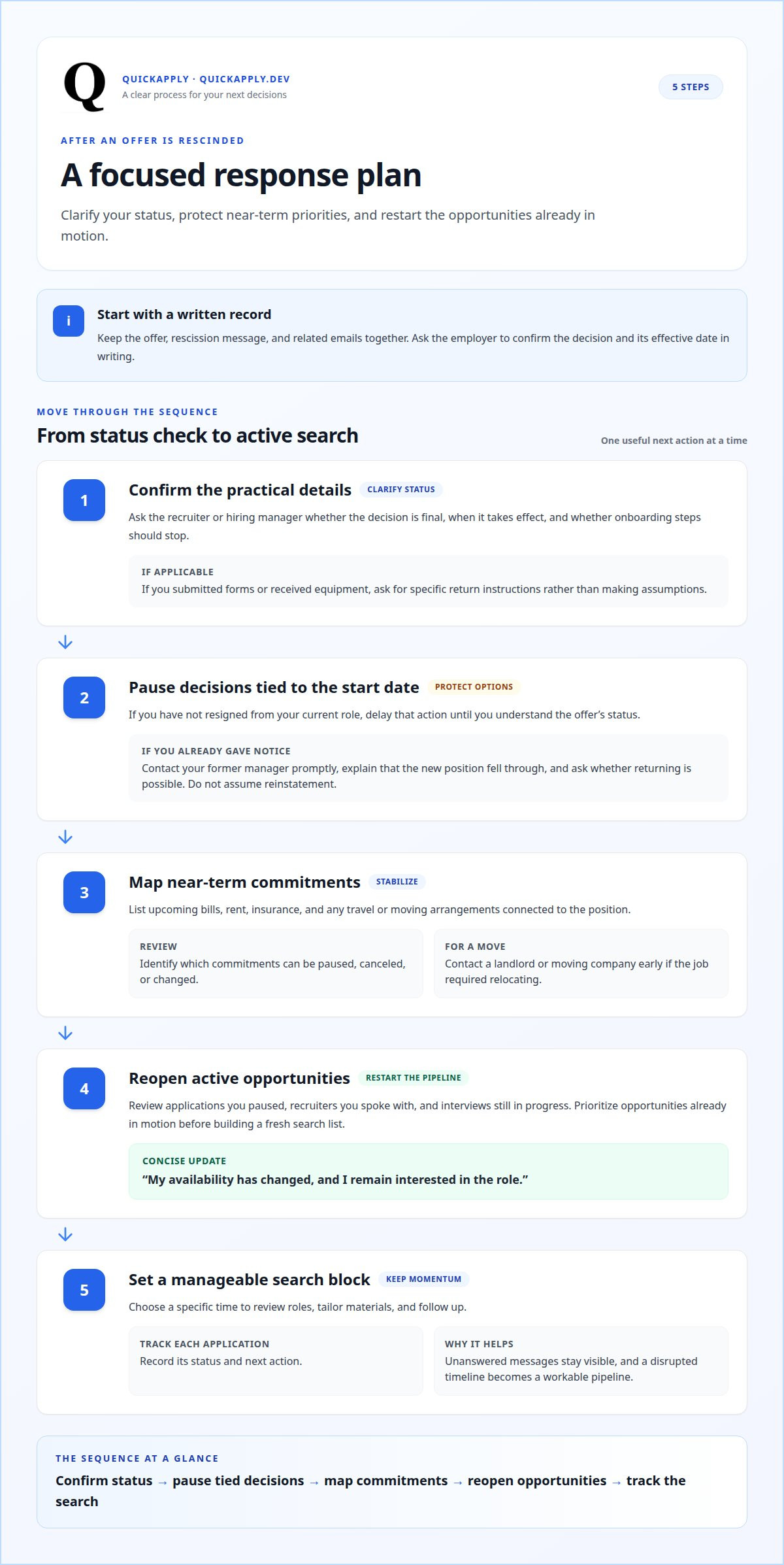
An immediate response is a focused sequence for clarifying your status and protecting your next decisions. Start by separating urgent tasks from longer-term job-search planning, then handle each item with a written record.
- Confirm the practical details. Ask the recruiter or hiring manager whether the decision is final, when it takes effect, and whether any onboarding steps should stop. If you submitted forms or received equipment, ask for specific return instructions rather than making assumptions.
- Pause decisions tied to the start date. If you haven’t resigned from your current role, delay that action until you understand the offer’s status. If you already gave notice, contact your former manager promptly and explain that the new position fell through. Ask whether returning is possible, without assuming reinstatement.
- Map your near-term commitments. List upcoming bills, rent, insurance, and any travel or moving arrangements connected to the position. Identify which commitments can be paused, canceled, or changed. For example, contact a landlord or moving company early if the job required relocating.
- Reopen active opportunities. Review applications you paused, recruiters you spoke with, and interviews still in progress. Send each contact a concise update: your availability has changed, and you remain interested in the role. Prioritize opportunities already in motion before building a fresh search list.
- Set a manageable search block. Choose a specific time to review roles, tailor materials, and follow up. Track each application’s status and next action so unanswered messages don’t disappear in your inbox. A consistent process turns a disrupted timeline into a workable pipeline.
A practical way to bounce back after a rescinded job offer is to focus on what you can control, such as resuming conversations already underway. For example, tell a recruiter, “My availability has changed, and I’d welcome a chance to continue discussing the role.”
If you’re deciding how to bounce back after a rescinded job offer, use an application tracking workflow to keep follow-ups visible and maintain momentum.
This point concerns creditors, rather than the recruiter, hiring manager, or current employer involved in an offer; the rescinding agencies stated that creditors should not rely on the 2022 interagency statement or related issuances.
How can you ask an employer why they rescinded a job offer?
A reason request is a professional inquiry seeking the employer’s explanation for withdrawing an offer. Keep it neutral, specific, and focused on information that can guide your next decision.
Address the person who communicated the decision, such as the recruiter or hiring manager. Thank them for the update, then ask for the main reason behind the change. Avoid sending the same request to several people at once, which can scatter the conversation and make the response harder to interpret. If a recruiter handled the process, start there and ask whether someone else can clarify the decision.
Make your question easy to answer. Ask whether the change involved the position, the organization’s hiring plans, or something specific in your candidacy. This gives the employer a clear way to explain, without requiring you to guess. If the answer refers to a detail you believe is inaccurate, calmly identify it and ask for clarification.
- Ask what changed after the offer was made.
- Ask whether the decision is final or tied to a specific condition.
- Ask whether the employer can share feedback relevant to future applications.
Keep the exchange factual. Don’t accuse the employer of bad faith or fill silence with theories about what happened. If you speak by phone, write down the explanation afterward and send a brief, courteous summary by email. This creates a clear record of what you understood and gives the employer a chance to correct any misunderstanding.
A reply may be brief or leave some questions unanswered. Use it to choose your next action: correct a factual error, adjust your application materials, or move on without treating an unexplained decision as a verdict on your skills. If the explanation raises concerns about your agreement or expenses, preserve the relevant messages and documents for separate review.
If a subpoena concern arises alongside the offer decision, keep the topics distinct. Social services organizations with 501(c)(3) status are recommended to ensure they are fully compliant while preparing to respond to subpoenas. You can keep your request focused on why the offer was withdrawn and address any compliance concern separately.
Can you recover lost wages or expenses after a rescinded job offer?
Recovering losses means seeking compensation for income or costs connected to a withdrawn offer. Rescinding a contract means canceling it and restoring the parties to the positions they would have occupied without it. Whether you can recover anything depends on the agreement, the employer’s actions, and the losses you can document.
Separate expected earnings from costs already incurred. A projected salary is income you expected after starting, while relocation costs are expenses you may have paid before your start date. Record the offer’s terms, start date, rescission message, resignation date, and each expense. Receipts, invoices, and dated emails can show what you paid and why.
- Review the offer documents. Note any conditions, termination language, or reimbursement terms that address withdrawal or relocation.
- Build an expense record. Group moving, travel, housing, or other job-related costs by date and keep supporting receipts.
- Ask for a written resolution. Identify the amount or expense category you’re raising and explain how it connects to the offer.
For example, if you paid a mover after accepting a position in another city, include the invoice and the employer’s messages about the start date. Ask whether the employer will reimburse that documented expense. Keep your request factual, distinguishing money already spent from future earnings you anticipated. Don’t present an estimate as a paid bill.
A lawyer can assess how the written offer, any conditions, your reliance on the offer, and the employer’s communications affect your options. Bring those records and a concise timeline to make the discussion efficient. Don’t assume an offer alone settles what either party may owe.
As you address the financial impact, keep future applications moving. Generate tailored cover letters to support your next round of applications.
QuickApply
QuickApply helps you turn a disrupted search into a more organized application process. Use it when you’re ready to pursue new roles and want to keep materials and follow-ups moving. Its AI-powered resume and cover letter tools tailor applications to job descriptions, while Interview Practice helps you prepare for employer conversations. The Application Tracker keeps your search organized in one place, so you can see which roles need attention and what to do next.
Choose support that fits your immediate priority: refresh application materials, prepare for interviews, or organize your active search. QuickApply can streamline these tasks, but it can’t reverse an employer’s decision or guarantee another offer. To get your search moving again, start with QuickApply.
Turn the interruption into your next move
A withdrawn offer can disrupt your planned timeline, but it doesn’t have to define your next decision. Use this transition to reset what you want from your next role: the problems you want to solve, the team structure where you work best, and the conditions you need before accepting. That filter gives each new conversation a sharper purpose and helps you spot gaps early, before excitement turns into assumptions.
A practical way to bounce back after a rescinded job offer is to build a repeatable search rhythm rather than wait for confidence to return. Set a clear goal for your next application session, keep notes on conversations, and make each follow-up specific. Completing small actions creates momentum and keeps one employer’s decision from controlling your schedule.
When you’re ready to restart with a more organized application workflow, put QuickApply to work on your next application. Keep your focus on the role ahead, and make the next step one you choose deliberately.
Frequently Asked Questions
Can a U.S. employer legally rescind a job offer after it is accepted?
Accepting an offer alone doesn’t determine whether an employer may lawfully withdraw it. The answer depends on the offer’s written terms, any conditions attached to it, and applicable state law. Compare the accepted offer with the rescission notice, especially language about contingencies or the employment relationship. If the documents conflict or the stated reason raises legal concerns, an employment lawyer can assess your situation.


