

Being fired can change your job search, but it doesn’t define your next move. How to find a job when you have been fired starts with an honest, concise explanation and a resume that puts your skills and results first.
It’s understandable to worry that a termination will overshadow your experience. You don’t need to put the reason for leaving on your resume or lead with criticism of your former employer. If an interviewer asks, keep your explanation brief, take responsibility where appropriate, and focus on what you learned and why the new role fits.
This guide explains how to update your resume and professional profiles, prepare for questions about your departure, and keep your search moving. You’ll find practical ways to present your experience confidently, organize applications, and focus on the opportunities ahead.
Key Takeaways
- Learn how a past termination may affect future opportunities, including why some employers have rehire policies.
- Keep your résumé focused on employment dates, relevant skills, and measurable accomplishments rather than the reason you left.
- Build a steady job-search routine and protect your professional reputation online while you reset and move forward.
- Refresh your résumé and professional profiles for each role, then use tools like QuickApply to tailor applications and track progress.
1. Explaining how being fired affects future prospects
Being fired can affect your eligibility for rehire: some companies have policies against rehiring former employees they dismissed. That policy applies to that employer, not every future opportunity. The Recruitment Lab founder Simon Royston has said he was fired five times, with each firing followed by a career step forward. Treat your next application as a chance to show your relevant skills, results, and fit.
Before an interview, prepare a brief, honest explanation. Say that the role ended, explain why without criticizing your former employer, then share what you learned and why this position is a better fit. Keep your answer factual and focused on what you can contribute next. Interview practice can help you explain the situation clearly and confidently.
Can you collect unemployment benefits after being fired in the United States? Possibly. According to the U.S. Department of Labor, workers unemployed through no fault of their own, as determined under state law, may qualify if they meet other eligibility requirements. States administer benefits, and eligibility, amounts, and duration vary by state.
How can you get a reference after being fired? Ask a former supervisor or senior colleague who can speak positively about your work. Aim for two or three references, and request a recommendation letter if a former manager or coworker has offered to support you.
How can you address a termination in a background check? Keep your dates and explanation consistent with your application, and answer direct questions honestly. A short, factual explanation is more effective than trying to hide the departure.
What should you do if you believe you were wrongfully fired? Speak with an employment attorney before signing anything related to the termination. Preserve relevant records and organize a timeline of events to discuss.
2. Leaving a former employer off your résumé as a reason for departure
Your résumé is a record of experience, not a place to explain every exit. List the former employer, your job title, and your employment dates. Leave the reason for departure off the résumé. For example, show “Software Developer, Acme, 2022-2025,” then use the space for skills, projects, and results. The date range gives employers a clear timeline without making the firing your headline.
Do you have to disclose that you were fired on a job application? You don’t need to volunteer the reason on your resume or cover letter. If an application directly asks whether you’ve been fired, answer truthfully and keep any explanation brief and factual.
Keep your application materials consistent. If your résumé lists a role from March 2022 through June 2025, use the same dates elsewhere. Don’t remove an employer simply to conceal a termination. That can create a gap or mismatch if an employer asks about your work history. Instead, prepare a concise explanation for direct questions, and keep the focus on your experience and fit for the role.
Your cover letter should connect your background to the position. Use one example that shows your relevance, such as a software release you coordinated or a customer problem you solved. Don’t use the letter to argue about your former employer or defend your departure in advance. Tailor the opening and strongest example to each job description, and save a clean copy for each application.
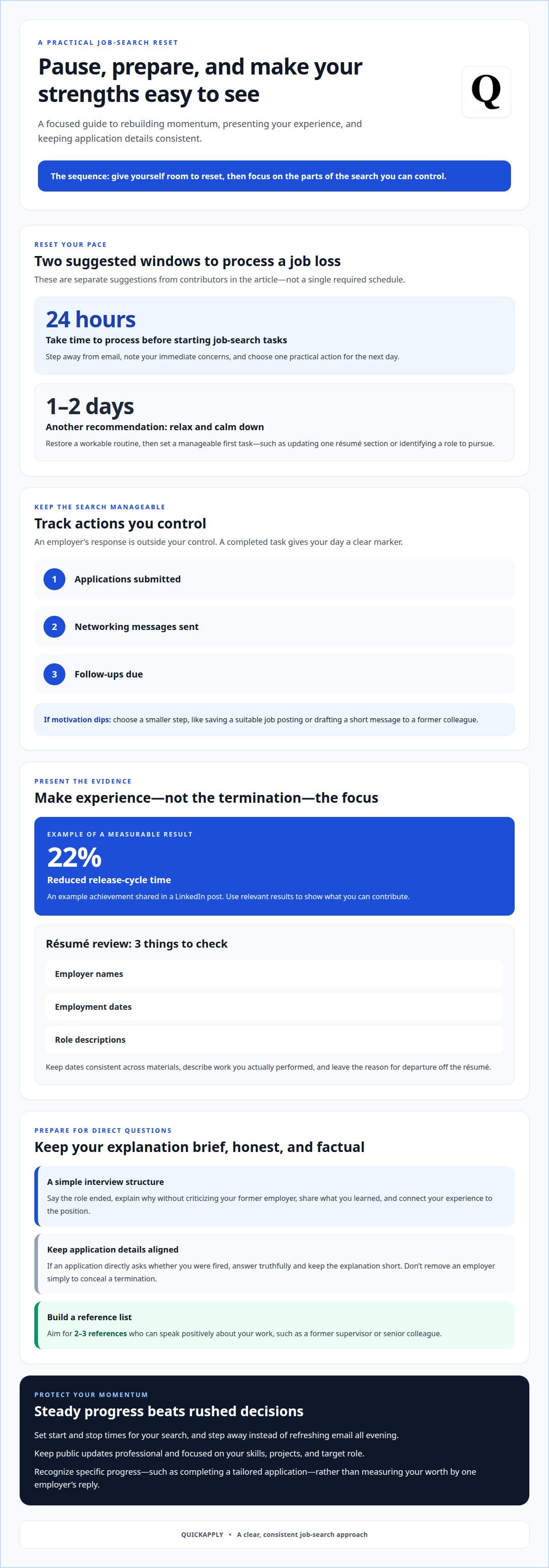
Before submitting, review three elements: employer names, dates, and role descriptions. Check that each bullet describes work you actually performed, and remove any wording that sounds like criticism of a previous workplace. A simple application tracker can help keep versions and submission dates organized, especially when applying to several roles. Use an application tracker to keep those application details together.
3. Maintaining a positive attitude
A job loss can trigger shock, anger, or fear. One LinkedIn contributor recommends taking 24 hours to process those feelings before starting job-search tasks. Use that pause deliberately: step away from email, write down immediate concerns, and choose one practical action for the next day. A short reset can keep a difficult moment from driving rushed decisions.
Another contributor recommends taking 1-2 days to relax and calm down after losing a job. Use the time to restore a workable routine, not to judge your career. For example, take a walk, sleep normally, and talk with someone you trust. Then set a manageable first task, such as updating one resume section or identifying a role to pursue.
Once you restart your search, track the actions you control. Record applications submitted, networking messages sent, and follow-ups due. An employer’s response depends on factors outside your control, but completing a task gives your day a clear marker. If motivation dips, choose a smaller step: save a suitable job posting or draft a short message to a former colleague.
Keep your public tone professional. Avoid angry or critical social media posts about a former employer, even when your frustration feels justified. Naming a manager or describing a workplace dispute can distract from your qualifications. If you need to vent, write privately or speak with someone you trust. Keep public updates focused on your skills, projects, and target role.
Protect your energy by setting boundaries around your search. Choose a start and stop time, for example, and step away instead of refreshing your email all evening. Ask a friend to review a draft message or practice a networking conversation. Recognize specific progress, such as completing a tailored application, rather than measuring your worth by one employer’s reply. A steady routine helps you move forward without letting the termination define your professional identity.
4. Updating a resume and professional profiles
For a practical plan on how to find a job when you have been fired, make your strongest evidence easy to scan. Start your resume with a summary naming your specialty and target role, then prioritize relevant achievements over routine duties. A LinkedIn post gives one example: “Reduced release-cycle time by 22%.” Use a figure only when your own records support it.
Describe each achievement through your actions, the work involved, and the result. A software professional might highlight automating a test process, resolving recurring defects, or coordinating a product launch. Include tools, scope, or outcomes that clarify your contribution. If exact metrics aren’t available, describe a concrete change, such as fewer manual steps or clearer handoffs.
Next, align your LinkedIn profile with the roles you want. Update your headline, summary, skills, and project descriptions so they reinforce the same strengths as your resume. Around 70% of employers use social media to vet candidates, so review public posts for angry comments or outdated claims. Keep your profile professional and consistent across platforms.
Knowing how to find a job when you have been fired also means tailoring your application materials. Adapt the top of your resume for each role, matching relevant skills and accomplishments to the job description. For example, a cloud engineer applying for infrastructure roles can feature deployment experience before less relevant work. Keep every claim accurate, and make sure your profile reflects the same capabilities.
Make updates repeatable: collect verified achievements, select the strongest examples for each role, then refresh matching profile sections. A tailored resume should connect your experience to the employer’s needs. Tailor your resume to each role and put relevant evidence first.
QuickApply
QuickApply helps you organize your next job search. Use resume tailoring and cover letter generation to adapt your application to each role, then practice explaining your departure before interviews. The application tracker keeps your search details in one place, making it easier to manage applications and follow-ups.
Use these tools when you’re ready to move from planning to submitting applications, or when you want a consistent way to prepare for interviews. Keep your answers honest and your materials focused on the skills you bring to your next role.
Ready to organize your job search? Start with QuickApply.
Put your next move into action
Being fired is one event in your work history, not the only signal employers can see. Make your value clear through focused applications, relevant examples, and consistent preparation. Learning how to find a job when you have been fired means treating each application as a fresh match between your experience and an employer’s needs.
Choose a role that fits your strengths, then tailor your materials to that target. Keep your explanation of the departure calm and consistent, and build momentum instead of revisiting decisions you can’t change. Make deliberate progress by preparing, applying, following up, and adjusting your approach to suit each role.
If you’d like a more organized way to approach your search, contact QuickApply for job search help. Take the next step with focus. Your experience still has value, and you can carry it into the right opportunity.
Frequently Asked Questions
How should you explain being fired in a job interview?
Give a brief, truthful answer, then pivot to what you can contribute. For example: “My employment ended after the team decided I wasn’t meeting expectations in one area. I took that feedback seriously and strengthened my project planning. This role’s focus on coordinating cross-functional launches matches the work I do best.” Use only details that accurately reflect your situation, and don’t share confidential information.
How can you answer why you left your last job after being fired?
Answer the question directly rather than using a vague phrase like “I wanted a change.” You might say, “My employer ended my role, and I’m now looking for a position where I can apply my strengths in data analysis.” Adjust the wording to reflect what happened. Keep your answer consistent with your application, and let the interviewer guide whether they want more detail.
How should you update your resume after being fired?
Start with a master resume containing your full work history, skills, and verified achievements. Make a tailored copy for each target role, then remove details that don’t support that application. Use a clear file name, such as “Jordan-Lee-Product-Analyst-Resume,” to identify each version quickly. Keep a separate record of edits so you don’t send an outdated draft.
Can a former employer tell prospective employers you were fired?
A former employer’s response may depend on its reference policy and applicable rules. Some employers limit references to basic employment details, while others may share more. Before listing someone as a reference, consider whether they can speak constructively about your work. Prepare a short, consistent explanation in case a prospective employer asks about your departure.
What are the best ways to find a job quickly after being fired?
Prioritize fit over sending the same application everywhere. Focus your search on no more than six companies and one or two job titles, then tailor each application to the role. Contact people in your network with a specific request, such as an introduction or insight into a team. Track follow-ups so promising conversations don’t get lost in a crowded inbox.


