

A polished job post can still hide an undefined role. The most useful red flags to look for in a tech job description are mismatched qualifications, vague duties, generic or copied wording, and limited details about the company, pay, or benefits. Each is a reason to look closer, not proof that the job is a bad fit.
It’s frustrating to spend time applying only to find that the role doesn’t match its description. Look for specifics: what you’ll own, how success is measured, and how the requirements relate to the work. This guide covers warning signs such as sweeping wish lists and wording that could describe almost any tech role, so you can spot uncertainty and prepare focused questions before moving forward.
Key Takeaways
- Compare required skills with the role’s core duties to spot a wish list that may signal an overloaded position.
- Look for clear responsibilities, goals, and expectations; vague wording can point to an undefined role.
- Use details about mission, compensation, and benefits to assess whether the opportunity aligns with your priorities.
- Notice generic or copied language, and use it as a cue to prepare focused questions before applying.
1. Excessive or mismatched qualifications
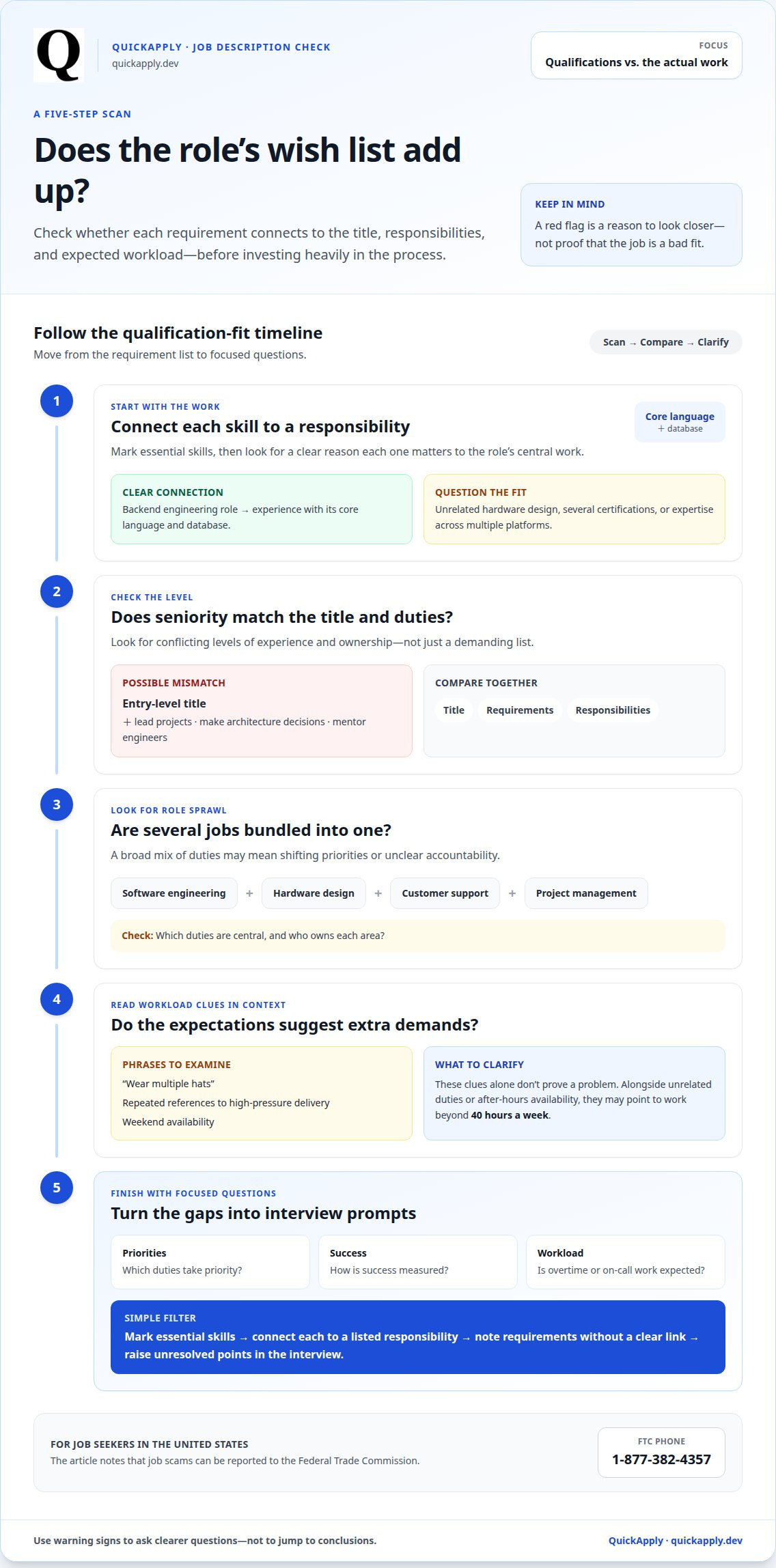
A long list of requirements can make a position look precise while obscuring what the team actually needs. A mismatch is one of the red flags to look for in a tech job description: senior-level system design, several programming languages, team leadership, and weekend availability paired with entry-level duties and pay. The employer may have combined multiple roles or may not have settled on the level it intends to hire.
Check whether each qualification relates to the central work. A backend engineering role might reasonably require experience with its core language and database. Adding unrelated hardware design, several certifications, and expertise across multiple platforms can signal an unfocused wish list. The issue isn’t just a high bar; it’s the lack of a clear reason why each skill matters to the role.
Compare the seniority of the requirements with the title and responsibilities. An entry-level title paired with expectations to lead projects, make architecture decisions, and mentor engineers describes conflicting levels of ownership. Scan the duties, too: a position combining software engineering, hardware design, customer support, and project management may be covering several teams’ needs. That breadth can mean shifting priorities and unclear accountability.
When scanning for red flags to look for in a tech job description, notice workload clues such as “wear multiple hats” or repeated references to high-pressure delivery. Those phrases alone don’t prove a problem, but they deserve context alongside unrelated responsibilities or after-hours availability. An expectation to handle stress or multiple roles may point to work beyond 40 hours a week. Ask which duties take priority, how success is measured, and whether overtime or on-call work is expected.
Use a simple filter: mark the essential skills, connect each to a listed responsibility, and note requirements without a clear link. If the role’s scope still doesn’t add up, raise those points during the interview. Job seekers in the United States can report job scams to the Federal Trade Commission by calling 1-877-382-4357.
2. Vague job descriptions and unclear expectations
A useful posting connects the role’s title to specific work and outcomes. “Build scalable systems” sounds relevant, but it leaves open which services you’ll own, how quality is measured, and who sets priorities. A stronger description might say you’ll maintain a named product area, contribute code reviews, and coordinate releases with product and operations teams. A good job description typically lists 5-8 responsibilities and expectations. If the duties remain broad, the position may not have a clear owner or purpose.
Watch for undefined phrases such as “handle whatever comes up” or “support all technical needs.” They can conceal recurring work across engineering, IT, and customer support. A posting that pairs “move fast” with “change direction quickly,” but gives no goals, decision-makers, or onboarding details, makes the work environment hard to assess. Scope can expand as priorities shift without clear ownership. Note what’s missing, then ask which deliverables matter most and who approves changes.
Technology clues matter, too. A description that names an older framework or internal tool without explaining its role, maintenance plan, or migration roadmap may point to outdated systems. References to manual deployments, no testing process, or constant emergency fixes can also raise questions about engineering practices. The posting alone can’t show how the team works, so treat these as prompts to investigate, not conclusions.
Use the interview to test specific concerns. Ask how the team handles code review, testing, deployment, and technical debt; then compare the answers with the job’s stated duties. For unclear expectations, ask what success looks like in the first projects, who sets priorities, and how workload changes are communicated. Consistent, concrete answers help you assess whether the role is defined. To prepare concise questions and practice delivering them, use interview practice.
3. Company mission, values, salary, and benefits
A mission statement should explain what the company builds and who benefits. Be cautious when a posting says you must be “passionate” about the mission but gives no concrete reason for joining. That emphasis can imply personal time should take a back seat to work. Likewise, “we’re a family” or expectations to be together 24/7 may blur boundaries instead of describing a healthy workplace culture. Treat those phrases as prompts to ask how the team handles time off and after-hours requests.
Compensation language needs specifics. “Competitive pay” and “based on experience” aren’t automatically bad, but they don’t tell you whether the role meets your needs. A range from $50,000 to $200,000 can leave the likely offer unclear, especially if the post doesn’t explain how experience affects placement. An advertised earning potential of up to $200,000 may also involve commission-based pay, which carries different risks from a fixed salary. Ask for the expected range and how base pay, bonuses, or equity factor into total compensation.
Compare the pay range with the qualifications and responsibilities. A demanding senior engineering role paired with compensation that seems out of step deserves a direct conversation. If the hiring team avoids discussing compensation after an initial conversation, that’s a warning sign. Get clarity before investing heavily in interviews, and decide whether the stated range fits your priorities.
Scrutinize benefits, too. If a posting says nothing about health coverage, paid leave, retirement plans, or other benefits, salary alone won’t show the full offer. Ask which benefits apply to the role and when they begin. Then compare the answers with the employer’s mission and stated values. If a company promotes work-life balance but can’t explain its time-off practices, or praises collaboration without describing team support, the gap matters. Specific, consistent answers help you assess the culture; vague promises leave key parts of the offer unresolved.
4. Generic or copied job descriptions
A job post that could fit any software company tells you little about the employer. Phrases like “build innovative solutions” or “collaborate with cross-functional teams” need context: which product, what user problem, and which teams? Without those details, it’s hard to tell whether the role reflects a real opening or a template that hasn’t been adapted to the work.
Look for inconsistencies within the posting. A “frontend engineer” description that devotes most of its space to database administration, or repeats the same broad duty under several headings, may signal that the employer hasn’t defined the position. Generic language doesn’t prove the workplace is bad. But without a clear product, team, or outcome, you have little basis for judging the day-to-day work.
Check whether the description connects to the employer’s products and team structure. For example, a company that names a specific app but never explains what the hire would build or maintain leaves a gap between its public identity and the role. Compare the title, responsibilities, and required skills. If they seem interchangeable with those in another tech job, note what’s missing: ownership, project context, or success criteria.
Turn those gaps into interview questions. Ask which product area the role supports, what problem the team needs this hire to solve, and how the employer will evaluate progress. Request an example of a recent project that matches the listed responsibilities. Specific answers can show whether the post was merely brief or the role itself is still taking shape. Before applying, prepare a tailored application that connects your experience to the employer’s actual needs.
QuickApply
QuickApply helps you move from evaluating a tech role to preparing a focused application. Once you decide a posting is worth pursuing, use Resume Tailoring and Cover Letter Generation to align your materials with its stated requirements. Interview Practice can help you prepare to clarify responsibilities, team processes, and success measures. Use the Application Tracker to organize promising roles and follow-ups alongside your search.
Keep your judgment in the loop. A polished application can’t resolve an employer’s unclear expectations, but targeted materials and prepared interview questions help you assess fit while presenting your relevant experience. If you’d like support organizing your next application, contact QuickApply.
Choose your next move with clarity
A job search works better when each application is a deliberate choice, not an automatic response to an appealing title. Treat the red flags to look for in a tech job description as prompts to pause, gather context, and decide whether an opportunity matches the work and environment you want. You don’t need perfect certainty before applying. You do need a clear reason to invest your time.
Set a decision rule before your next application: define what makes a role worth pursuing, what you need to learn during interviews, and what would make you step back. Briefly note why each opportunity appeals to you. Over time, those choices can sharpen your priorities and help you focus on roles that fit your goals.
QuickApply can support your next step with Resume Tailoring, Cover Letter Generation, and Interview Practice. Prepare for your next opportunity with QuickApply, and move forward with confidence.
Frequently Asked Questions
What are common red flags in a tech job description?
Common warning signs include conflicting details, unexplained urgency, and missing information about how the team operates. Read the posting as a whole: does the title match the duties, and do the stated priorities fit together? One awkward phrase alone doesn’t define a workplace. A cluster of inconsistencies deserves follow-up, especially if the interviewer’s explanation conflicts with the written description.
What vague or unrealistic requirements should job seekers watch for in tech postings?
Watch for requirements that describe personality instead of work, such as “always available,” or demand broad expertise without naming the systems involved. A product role that demands deep experience across engineering, sales, and support needs context. Separate actual job tasks from vague traits, then ask which capabilities the team uses most often and how they apply to the role.
How can you spot an inflated list of required skills or years of experience?
Sort the listed skills into “needed on day one” and “useful later.” If a posting makes every tool mandatory, including technologies unrelated to its core tasks, the list may be inflated. Compare the experience requirement with the role’s decision-making scope, too. Years alone don’t show proficiency, so ask how the team evaluates practical ability and which skills are truly essential.
What does a tech job description reveal about workload, overtime, and work-life balance?
Look for clear expectations around on-call rotations, incident response, weekend work, and release schedules. “Flexible hours” means little without knowing whether flexibility includes after-hours coverage. Ask how often urgent incidents occur, how coverage is shared, and whether time off follows demanding releases. Clear answers help distinguish an occasional production incident from a routine expectation of constant availability.
What phrases in a tech posting may signal a toxic or high-pressure workplace?
Terms like “ninja,” “shark,” or “guru” can frame aggression or individual heroics as workplace values. “Must thrive under pressure” also needs context if the posting says nothing about team support or planning. Treat these phrases as interview prompts, not a diagnosis. Ask how managers handle missed deadlines, resolve conflict, and support employees during high-demand periods.
How can unclear salary ranges or compensation terms be warning signs in tech jobs?
Unclear compensation makes it difficult to judge whether an opportunity fits your needs. Ask how the employer sets base salary and whether bonuses or equity are part of the offer. Clarify when those components are earned and what conditions apply. A total-compensation figure without a breakdown can obscure the guaranteed portion, so get the terms explained before weighing the offer.


