

Your job search needs structure, not every hour of your day. Learning how to build a routine when unemployed starts with consistent sleep and at least seven hours of rest, followed by focused time for applications, skill-building, and connection. Set a clear stopping time so your free time stays free.
It’s easy for the days to blur together when work no longer sets the pace. And when the job search feels urgent, it can crowd out the rest, relationships, and everyday life you need. If you’re figuring out how to build a routine when unemployed, start by giving your week a clearer rhythm without making every day feel like a workday.
Create a flexible schedule with consistent sleep, focused job-search blocks, learning, and time with other people. Set practical boundaries that help you step away from applications and protect time for life outside the search.
Key Takeaways
- Anchor your day with steady sleep and wake times, then build a morning rhythm that helps you start focused.
- Make skill-building and creative interests part of your week to keep learning active beyond the job search.
- Protect time for friendships and social connection so your routine includes support, not just tasks.
- Use defined job-search blocks and a clear stop time; an application tracker can help keep the process organized.
1. Keeping consistent bedtimes and wake-up times
Set a repeatable sleep window before planning applications or study sessions. Aim for at least seven hours of sleep, and keep bedtime and wake-up time steady across weekdays. If you previously woke at 6am for work, use that as your starting point. An 11pm bedtime provides seven hours before a 6am wake-up. If those times don’t suit your needs, choose another pair and keep the same rhythm.
Make the first hour a simple launch sequence. Before checking your phone, email, or the news, get moving with a short walk or gentle exercise. Start slowly if exercise has been absent from your routine. Pets or children may need immediate attention, so handle those needs first. Then prepare breakfast at home, get dressed, and begin your day ready for focused work. A weekday 8:00-9:00 block can hold waking, breakfast, coffee, messages, and yoga.
Use a consistent morning to protect time for learning, not just applications. Choose one industry topic to follow, such as a software release, a design trend, or a new tool used in your field. Read product documentation, review a professional article, or practise a relevant skill. Put the task in a defined study block rather than letting news feeds fragment your morning. Write a short note about what you learned to give the session a clear outcome.
Build the rest of the day around predictable transitions. Schedule lunch and a short break from 1:00-1:30, then use 1:30-5:00 for interviews, errands, studying, or learning. This creates room to refresh industry knowledge without pushing bedtime later. Before getting out of bed, pause and name one thing you appreciate; then follow your planned morning steps. A stable sleep schedule gives these activities a reliable place, even when interviews or errands shift from day to day.
2. Learning new skills and exploring creative interests
In the United States, free options can include online tutorials, public-library learning resources, and volunteer projects. A practical way to build a routine when unemployed is to choose one activity with a clear outcome, such as practising spreadsheet analysis or writing for a community group.
Start with a target role, then identify a skill it requires. For example, a software applicant might practise GitHub workflows, while a marketing candidate could draft sample campaign copy. Choose one course or learning resource, then create a small project that demonstrates the skill. A finished sample makes your progress visible and helps you explain what you learned.
Courses and training are most useful when they address a specific skill gap. Review the syllabus and choose lessons tied to a practical need, such as data analysis, technical writing, or customer support. Turn each lesson into an output: a spreadsheet, a short guide, or a sample response. Complete the exercises instead of letting videos play in the background.
Make room in your schedule for creative interests, too. Try sketching, photography, cooking, or writing for a change of pace from applications and coursework. Choose a project with a simple finish line, such as a photo series of neighborhood architecture or a collection of recipes for family meals. It can be personally rewarding without becoming another career task.
If you’re deciding how to build a routine when unemployed, make learning visible and manageable. Track the skill, resource, project, and next step in a document. For instance, note that you practised Excel formulas and plan to apply them to a sample budget. Review your notes before updating your resume or preparing for an interview. If new training changes how you present your experience, connect it to a role in a tailored cover letter.
3. Maintaining friendships and social connection
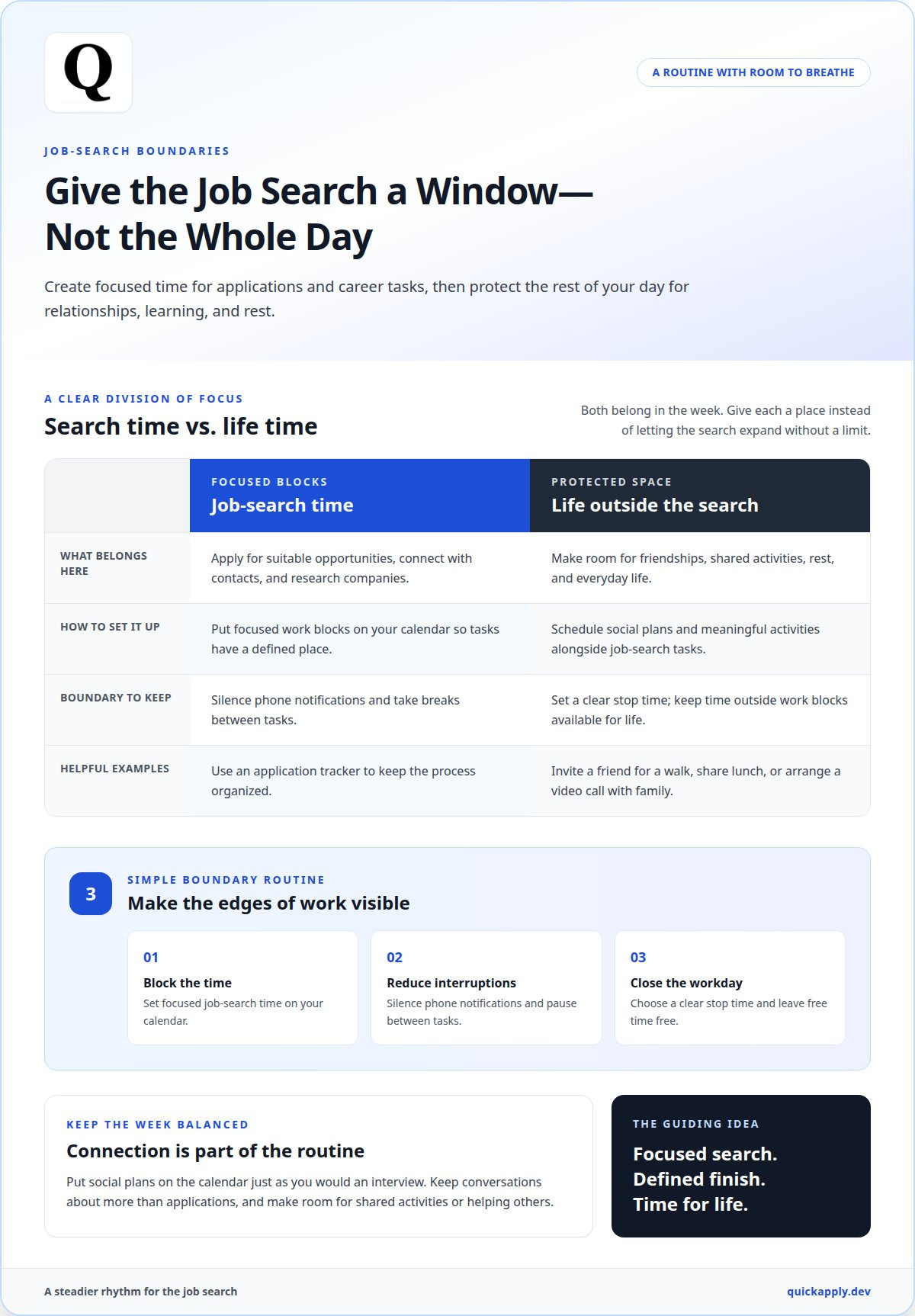
Protect your motivation by scheduling social plans and meaningful activities alongside job-search tasks. If unemployment feels isolating or distress becomes difficult to manage, talk with someone you trust or a qualified mental health professional. A regular conversation gives you a specific point of connection during the week.
Make plans easy to keep. Invite a friend for a walk, share lunch with a former colleague, or arrange a video call with family. Put the plan on your calendar, just as you would an interview. If money or travel limits your options, choose a free activity, such as meeting at a public park or calling while you both take a walk. A concrete invitation, like “Would you like to walk Thursday afternoon?” is easier to answer than “We should catch up.”
Keep conversations about more than applications. Tell friends what you’re learning or making, then ask about their week. For example, share a small course project and ask about a friend’s new recipe or home project. This keeps the relationship reciprocal instead of making every interaction a work-status update. If someone offers a useful contact, follow up separately so the friendship doesn’t become just a networking channel.
Build contribution into your routine, too. Set aside a couple of hours a week to help others, such as assisting a neighbor with errands or supporting a community event. Choose a commitment that fits your energy and schedule, then add it to your calendar. A planned contribution gives you a practical reason to get out and connect. Keep a short list of people you want to check in with, and choose one name when your day feels disconnected. Regular contact, shared activities, and useful contributions give the week structure beyond applications.
Focused work blocks give job-search tasks a clear place in the week without displacing social connection. Use them to apply for suitable opportunities, connect with contacts, and research companies. Keep the time outside those blocks available for friendships, shared activities, and rest. Separating these parts of your routine can help you stay engaged with the search while investing in relationships that matter beyond work.
4. Setting boundaries between job-search time and free time
A job search can expand to fill the day unless you define a work window. Block focused time on your calendar, silence phone notifications, and take breaks between tasks. A weekday template can reserve 9:00-1:00 for applications, emails, cover letters, and unemployment-related tasks. Treat the end of that block as a real stop, not an invitation to keep refreshing listings.
Four focused hours can be more useful than trying to apply for eight hours a day, five days a week. Use that time to apply for suitable opportunities, connect with contacts, and research companies. Break the work into specific tasks, such as tailoring an application or preparing interview questions. When the scheduled block ends, step away and give the rest of the day to responsibilities, learning, and loved ones.
Set goals around actions you control. Choose a short list of roles that match your experience, then plan time to research each company and prepare a strong application. Track applications and follow-ups in one place so progress doesn’t depend on memory. If a morning block doesn’t fit your day, reserve one to two hours in the afternoon for focused job-search work instead. Define the time window before opening job boards.
Protect free time with a visible boundary. Silence job alerts after your chosen stop time, and avoid checking application email during dinner or a planned visit with friends. Use 5pm as a clear transition into personal time, or choose another boundary that works for your schedule. Move household responsibilities, studying, or leisure into the time that remains, rather than extending the search by default. To make focused application blocks easier to manage, organize your applications in one place.
Keep each block bounded by putting its start and finish in the calendar, muting phone notifications while you work, and pausing between focused sessions. A 4-hour effort gives the search a defined place without claiming every waking hour; if that schedule does not fit, set aside one to two hours each afternoon while unemployed. On a typical weekday, the author uses 5 pm as the earliest time to watch television, leaving the rest of the day for responsibilities, learning, and enjoying time with loved ones.
QuickApply
Once you’ve set clear work and personal boundaries, QuickApply can help with the job-search part of your routine. Use Resume Tailoring and Cover Letter Generation to prepare application materials, Interview Practice to rehearse, and the Application Tracker to organize opportunities. These tools bring job-search tasks into one workflow, making your schedule easier to manage.
Turn to QuickApply when you’re ready to move from planning your week to managing applications and interview preparation. Keep your learning, relationships, and personal time on the calendar, too. If you’d like support organizing your job search, contact QuickApply.
Make your next step manageable
The next phase doesn’t need a perfect plan. Start with one change you can maintain, then review your routine after a week. Notice which parts protect your energy and which help you take useful action. Keep what works and revise what doesn’t. That’s a practical way to build a routine when unemployed without turning every day into a performance test.
Your job search can move forward while your life remains bigger than applications. Leave room to adapt when an interview, family need, or new opportunity changes your day. A flexible structure helps you reset instead of abandoning the whole plan.
When you’re ready to make application tasks easier to manage, contact QuickApply for support. Take the next step at a pace you can sustain, and build from there.


