

Your career is not a race with a shared finish line. To learn how to stop comparing your career progress to others, define what success means to you, take a clearer look at your current situation, and set goals based on your priorities rather than someone else’s timeline. That gives you a more useful way to measure progress.
It’s easy to treat a friend’s promotion, salary, or polished career update as proof that you’re falling behind. But you’re seeing one part of their story, not a reliable measure of your potential. Comparison can obscure what you want and turn other people’s choices into pressure.
This guide will help you identify what makes work meaningful, view your current position with perspective, and separate personal goals from social expectations. You’ll find practical ways to set a pace that fits your life and track progress on your own terms.
Key Takeaways
- Reduce comparison triggers by setting boundaries around the updates and conversations that pull your focus away from your own path.
- Identify what makes work feel meaningful, then use those signals to shape your definition of career success.
- Reframe your current position with a more balanced account of what you’ve learned and achieved.
- Separate goals you genuinely value from milestones you feel pressured to reach on someone else’s timeline.
Comparing progress with friends
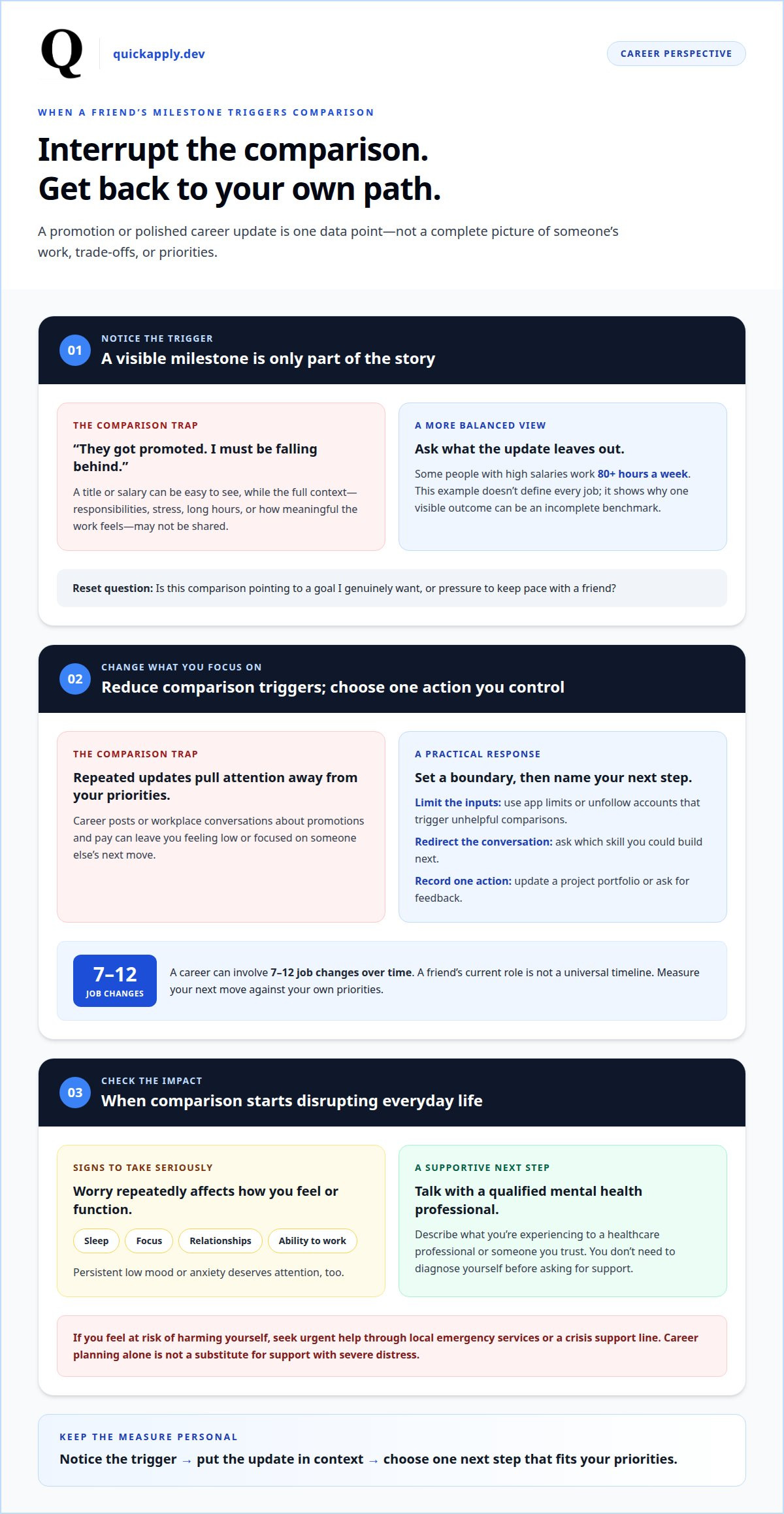
Use these three steps to interrupt comparison and regain perspective. A friend’s promotion or polished career update is one data point, not the whole picture.
-
Recognize Why Career Comparisons Happen
Notice what triggers the comparison, then separate visible milestones from the full story. Friends may share a new title or salary, while leaving out trade-offs such as long hours, stress, or work that feels less meaningful. Some people with high salaries work 80+ hours a week. That example doesn’t define every job, but it shows why comparing one visible outcome can give you an incomplete benchmark.
Ask what the comparison is signaling: a goal you genuinely want, or pressure to keep pace with a friend? This distinction turns a vague feeling of falling behind into a specific question about your priorities.
-
Use Practical Ways to Reduce Comparison
Set boundaries around the inputs that trigger unhelpful comparisons. For example, use app limits or unfollow accounts whose career posts leave you feeling low. At work, redirect conversations about promotions or pay toward a concrete question about your own next step, such as which skill you want to build.
Then record one action you control, such as updating a project portfolio or asking for feedback. A career can involve 7-12 job changes over time, so a friend’s current role is not a universal timeline. Measure your next move against your own priorities, not their latest update.
-
Notice When Comparison Affects Well-Being
Notice whether career comparisons are disrupting everyday life. If worry about coworkers or friends repeatedly affects sleep, focus, relationships, or your ability to work, speak with a qualified mental health professional. Persistent low mood or anxiety deserves attention, too. You don’t need to diagnose yourself before asking for support.
Make the next step concrete: describe what you’re experiencing to a healthcare professional or someone you trust. If you feel at risk of harming yourself, seek urgent help through local emergency services or a crisis support line. Career planning alone is not a substitute for support with severe distress.
Defining personal career success
Set goals around the work and life you want, then track evidence of progress. Realistic goals reflect your priorities, current responsibilities, and the skills or opportunities you can pursue next.
- Identify what makes work fulfilling. Record moments when you feel engaged at work. Note the task, people, pace, and impact involved. You might feel energized while solving a technical problem, helping a teammate, or completing focused work. Look for patterns. They can reveal whether your definition of success centers on autonomy, learning, stability, recognition, or another value.
A practical part of learning how to stop comparing your career progress to others is defining what you actually want from work. A title matters when it supports your priorities, not simply because a peer has earned it.
- Turn priorities into realistic goals. Choose a goal linked to one of your values, then name a next action. If you value learning, identify a skill to practice through a project. If you want greater responsibility, decide which work you’d like to own. Keep the goal within your control, and revise it when your workload or priorities change.
Track actions and outcomes, not only promotions or job changes. An application tracker can organize applications and follow-ups if a new role is part of your plan. For other goals, keep a record of completed projects, feedback, and skills you’ve used.
- Get another perspective when insecurity clouds your plan. A mentor can help you understand workplace expectations, identify useful skills, and assess whether a goal fits your situation. Career coaching can provide structured reflection and accountability. Bring a specific example, such as feeling overlooked after leading a project, so the discussion can focus on evidence and possible next steps.
As you learn how to stop comparing your career progress to others, use feedback to clarify your options, then choose a goal aligned with your values and constraints. Review your progress record when doubt returns, and update your plan as circumstances change.
Tracking moments when you feel engaged at work can reveal what makes work fulfilling. Revisit those notes when setting goals, so your next steps reflect the activities and conditions that matter to you.
Reframing your career situation
Use evidence to assess your progress instead of treating a coworker’s milestone as a verdict. These three steps can help you compare fairly, respond thoughtfully, and identify useful benchmarks.
-
Measure Progress Against Your Past Self
Compare your current responsibilities, skills, and results with your earlier work. List projects you can now handle independently, feedback you’ve applied, and problems you’ve learned to solve. Cynthia Pong recommends keeping a running accomplishments list, often called a “Brag Sheet.” Add concrete examples, such as a process you improved or a project you completed, to make your progress visible.
Use the list to spot growth that a title alone might not show. If you’ve built new capabilities but still feel overlooked, define what recognition or opportunity you want next.
-
Respond to Coworkers’ Promotions or Higher Pay
Pause before treating a coworker’s promotion or higher pay as proof that you’re behind. You may not know their responsibilities, experience, results, or role expectations. One example is asking why 30 years of experience have not been recognized. Turn that frustration into a focused review of your contributions and the criteria used for advancement.
Then request a clear conversation about expectations, evidence, and next steps. Bring examples from your Brag Sheet, explain which responsibilities you’re ready to take on, and ask what specific outcomes would support advancement. Focus on information you can act on, not assumptions about a coworker’s circumstances.
-
Check Your Standing With Reliable Benchmarks
Compare like with like before deciding you’re underpaid or falling behind. Look for roles with similar responsibilities, experience requirements, location, and working conditions. Review multiple current job postings, published salary surveys, and employer pay ranges where available. A job title alone is a weak comparison because the work’s scope can differ substantially.
To assess career progress, compare the skills and responsibilities expected at your level with your current work. Note gaps you can address and achievements that support a compensation or promotion discussion. Benchmarks provide context, but they don’t fully measure your value or replace a review of your own goals.
Separating personal goals from social pressure
Social expectations can turn someone else’s milestones into a deadline for your life. Use these steps to filter outside pressure and choose goals that fit your priorities.
- Name the expectation. Write down the milestone you feel pushed to reach and where that pressure comes from. A common script says you should have a high-paying job by your late 20s, own property and be married by 30, then have children in your early 30s. Treat those ages as social expectations, not a required career plan.
Ask whether you want the milestone itself or fear being judged without it. For example, financial stability may be your goal, while buying property by a certain age may not be. Separating the underlying value from the expected milestone gives you room to choose another route.
- Audit the comparison feed. Notice how social media affects your self-esteem after you view career updates. Posts often show a promotion, new title, or polished announcement without the context behind it. That selective view can make other people’s timelines seem more complete and urgent than your own.
Choose one practical boundary: mute an account that repeatedly triggers pressure, unfollow it, or set an app limit. Then replace scrolling with a goal-related action, such as noting a skill you want to develop. This changes what you take in instead of letting a feed set your priorities.
- Set a personal decision filter. Before accepting a goal, check whether it supports your values, responsibilities, and preferred way of working. If a high-paying role requires trade-offs you don’t want, the salary alone may not make it the right target. If marriage, parenting, or homeownership matters to you, define the goal without imposing someone else’s deadline.
Use your filter when friends or online contacts announce milestones. For your next career move, identify the role conditions that matter most, then focus your application on those priorities. Prepare an application around your priorities when you’re ready to pursue a role that fits.
QuickApply
QuickApply helps you turn your career priorities into a focused job search. Its AI-powered platform tailors resumes and generates cover letters for specific job descriptions, while Interview Practice helps you prepare to discuss your experience. The Application Tracker keeps your search organized, so you can focus on roles that fit your goals rather than measure progress against someone else’s timeline.
Use these tools when you’ve decided what matters in your next role and are ready to act. QuickApply can support your application process while your definition of success stays yours. Start a free trial of the QuickApply platform to focus your job search on roles that fit your priorities.
Make your next move your own
Your career doesn’t need to match a friend’s timeline to move forward. Learning how to stop comparing your career progress to others starts with choosing one next step that reflects what matters to you, then taking it deliberately. Treat other people’s milestones as information, not instructions. Your priorities can change, and your definition of progress can change with them.
If you’re ready to turn your direction into a focused job search, QuickApply can support the application process. Contact QuickApply for career support and decide what practical next step fits your goals. You’re allowed to set a pace that works for your life. Keep choosing from your own priorities, and let your progress build from there.
Frequently Asked Questions
How can you define career success based on your own values and goals?
Define career success by creating a personal scorecard of the conditions you want work to meet. Choose criteria such as meaningful impact, schedule flexibility, learning, or income stability, then rank them by importance. For example, if flexibility matters more than title, assess an opportunity’s working arrangement before comparing job levels. Revisit your scorecard as your responsibilities or circumstances change.


